

A client asks why the projector looks dull a year after install, or a school wants to know how many spare lamps to budget for. Both come down to one question: how long do projector lamps last? The answer is a rating, and heat, dust and lamp mode decide how close a lamp gets to it. This guide explains what the rating means, how to plan around it and when to change the lamp.
How long do projector lamps last?
As long as the hour rating the projector maker publishes for that lamp, usually given for normal and eco mode. Many lamp-based projectors are rated somewhere around 2,000 to 5,000 hours in normal mode and longer in eco, but read the spec. Heat, clogged filters and frequent short power cycles shorten real life.
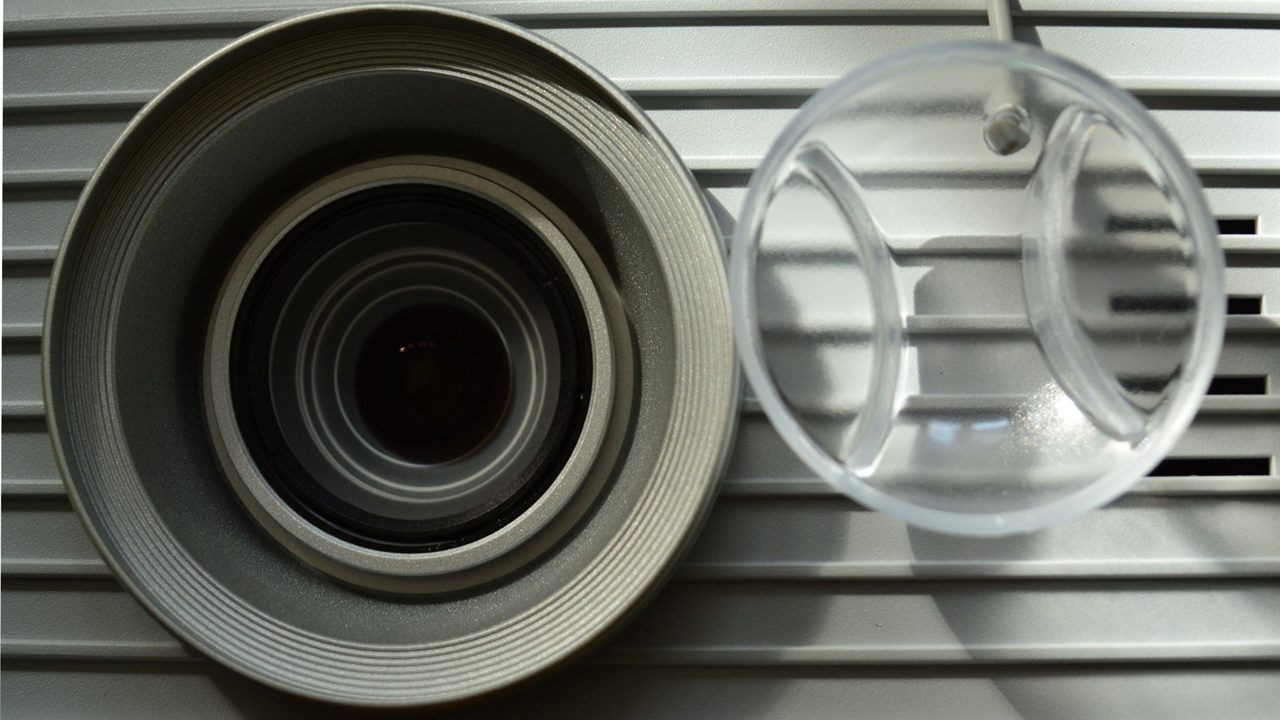
How long do projector lamps last: what the rating means
Lamp life is a manufacturer specification. Each maker publishes an hour figure for each lamp, often two: one for normal or bright mode and one for eco or low-power mode. That figure is the number to plan with, and it lives in the projector manual and on the lamp’s spec sheet.
The rating is not a countdown to a dead lamp. Buyer’s guides and makers commonly describe it as the point where brightness has fallen to about half of what it was when new. A lamp can keep striking past that point, just dimmer, and a lamp can also fail early.
Most projectors keep a lamp timer in the menu that counts running time against the rating. Treat it as a guide: it measures time, not the lamp’s actual condition.
Normal vs eco mode and projector lamp hours
Eco mode runs the lamp at lower power. Less power means less heat and slower wear, which is why makers list a longer life for it. The cost is brightness: the image is noticeably dimmer, and in a room with daylight or bright overhead lighting that may matter more than lamp life.
The table shows how the trade usually works. The ranges are typical figures seen on spec sheets, not a specification for any lamp; read the lamp’s own rating before you plan.
| Factor | Normal or bright mode | Eco or low-power mode |
|---|---|---|
| Rated lamp life | The lower figure in the spec; many lamps fall around 2,000 to 5,000 hours | The higher figure in the spec; often well above normal |
| Brightness | Full rated output | Noticeably lower |
| Heat and fan noise | Higher | Lower |
| Best fit | Bright rooms, large screens | Dark rooms, smaller screens, long daily use |

Turning a lamp rating into a service date
A rating only becomes useful when you convert it into calendar time for the way the room is used. Every figure in this example is an assumption for illustration; swap in the real rating and the client’s real schedule.
- Classroom: 6 hours a day, 5 days a week, 40 weeks a year is 6 x 5 x 40 = 1,200 hours a year.
- Lamp rated 3,000 hours in normal mode: 3,000 / 1,200 = 2.5 school years.
- Same lamp rated 5,000 hours in eco mode: 5,000 / 1,200 = about 4.2 school years.
- Home theater: 3 hours a night, every night, is 3 x 7 x 52 = 1,092 hours a year, so a 3,000-hour lamp lasts about 2.7 years.
Use the result to schedule a lamp check, not a lamp swap. Plan a spare lamp for rooms where a dark projector stops a class or a meeting, and match its part number before ordering.

Heat, filters and ventilation: how to extend projector lamp life
Heat is the main thing you control. A lamp that runs hot ages faster, and a projector that overheats shuts down to protect itself.
- Clean or replace the air filter at the interval in the manual, and sooner in dusty or smoky rooms. Many projectors warn when the filter is due.
- Keep the intake and exhaust vents clear. Check the clearances the manual gives for walls, shelves and ceiling enclosures.
- Ventilate cabinets and closets. A projector in millwork or a hush box needs a path for cool air in and warm air out, the same as amplifiers in a rack.
- Let the fans finish. Never cut power while the projector is cooling the lamp after shutdown.
- Avoid needless short cycles. Switching a lamp on and off repeatedly is widely held to shorten its life; turn it off for long breaks, not for five minutes.
For cabinet airflow, our guide on how to choose an AV equipment rack covers intake, exhaust and fans. A wall switch or switched outlet that cuts power before the cool-down finishes defeats the fans, so feed the projector from an always-on outlet. For protecting that feed, see power conditioners vs surge protectors.
End-of-life signs: when to change the lamp
Lamps fade gradually, so the change is easy to miss in a room people use every day. Look for these signs:
- The image is dim even in the projector’s brightest mode.
- Colors look off, or the picture flickers or takes longer to reach full brightness.
- The lamp indicator lights or the projector shows a lamp replacement message.
- The lamp timer is at or past the rated figure for the mode in use.
Do not run a lamp far past its rating. It keeps getting dimmer, and some projectors limit or stop operation once the timer passes a set point. The step-by-step swap, timer reset and safe disposal are covered in our guide on how to replace a projector lamp.
Lamp vs LED vs laser light sources
Many newer projectors use LED or laser light sources instead of a lamp. These are solid-state sources, and they behave differently with age. ENERGY STAR explains that LEDs typically do not burn out but fade slowly, with lifetime set by a prediction of when output drops by 30 percent, and that higher operating temperatures make them degrade faster.
Projector makers set their own end point for their solid-state light sources, so compare the stated figure and what it means, not just the number. Treat the table as a general comparison.
| Light source | How it ages | Service item | What to check |
|---|---|---|---|
| Lamp | Dims over its rated life; can fail early | Replaceable lamp module | Normal and eco ratings, lamp part number |
| LED | Fades gradually | Usually not user replaceable | The rated life and the brightness level it is rated to |
| Laser | Fades gradually | Usually not user replaceable | The rated life, its brightness end point and the mode it assumes |
For an existing lamp-based projector, a fresh lamp is often the practical repair. For a new room, the light source is part of the projector choice and its long-term service plan.
Ordering replacement projector lamps
The replacement projector lamps category lists lamps by part number, both complete modules with housing and bare lamps. It sits in the Bursma audio video division. Long cable runs to ceiling projectors are a separate question, covered in HDMI cable length limits.
For pricing and availability, or help matching a lamp part number, ask your sales representative through the Bursma contact page or call the Wyoming, MI branch near Grand Rapids. Installers without an account can apply for a Bursma dealer account.
Frequently asked questions
How many hours does a projector lamp last?
It is whatever the maker publishes for that lamp and mode. Many lamp-based projectors are rated around 2,000 to 5,000 hours in normal mode and longer in eco, but the figure varies by model, so read the spec.
Does eco mode extend projector lamp life?
Usually, yes. Makers list a longer life for eco or low-power mode because the lamp runs cooler. The picture is dimmer, so it suits darker rooms and smaller screens.
Is it bad to turn a projector on and off often?
Frequent short cycles are widely held to shorten lamp life, and cutting power before the fans finish can damage the lamp. Turn the projector off for long breaks and always let it cool down.
Do LED and laser projectors need lamp replacement?
Not in the usual sense. Their light sources fade gradually and are usually not user replaceable. Check the rated life and the brightness level it is rated to.