

A customer has an antenna, several TVs and pixelating channels, and wants a TV signal amplifier. The distribution amplifier vs preamp question decides whether that amplifier goes on the mast or beside the splitter, and picking the wrong one leaves the problem where it was. This guide explains what each one fixes, works through the noise numbers, and shows when a system needs both.
What is the difference between a preamp and a distribution amplifier?
A preamp mounts at the antenna and boosts the signal before downlead and splitter losses, so it suits weak or distant stations. A distribution amplifier sits indoors where the signal is split and makes up for splitter and in-house cable loss when the signal arriving there is already healthy. Large systems sometimes use both.
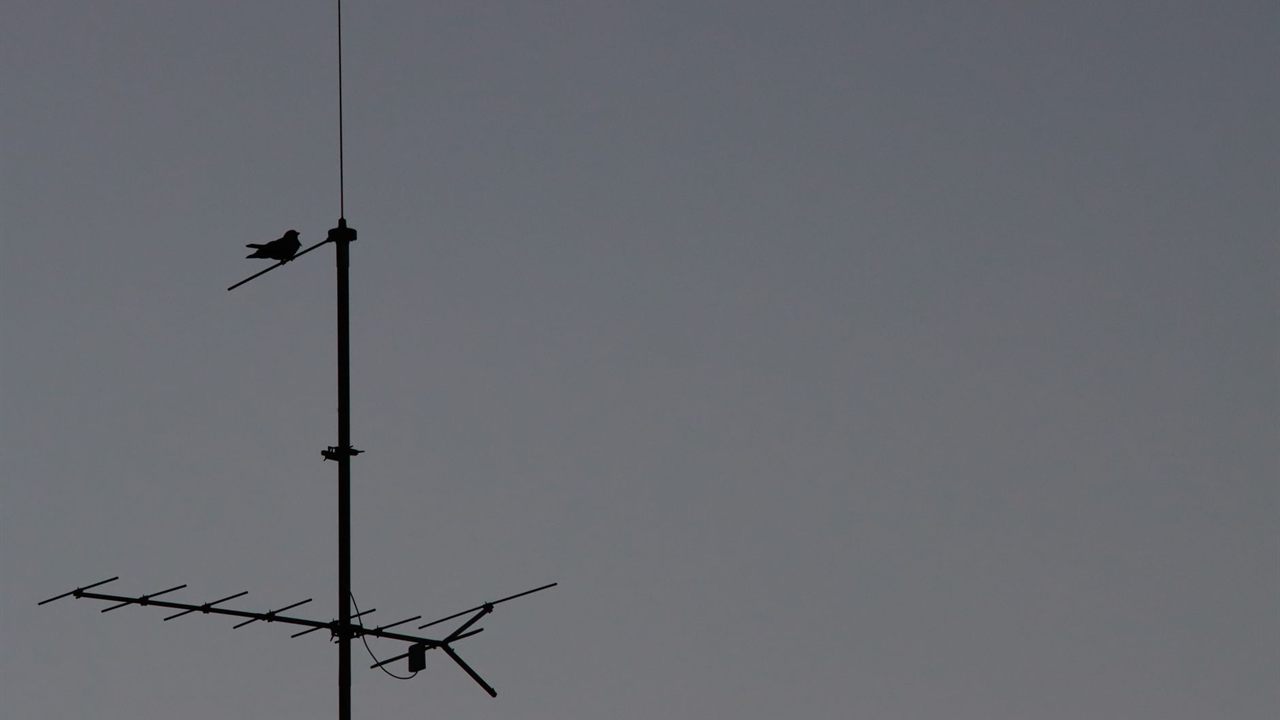
Distribution amplifier vs preamp: what each one does
A preamplifier is a small outdoor amplifier clamped to the mast, right below the antenna. It is normally powered up the coax from a power inserter indoors, and it raises every signal before the downlead has a chance to lose any of it.
A distribution amplifier is an indoor unit with one input and several amplified outputs. It replaces a passive splitter at the point where the signal fans out to the rooms, and its gain covers the loss of the split and the runs to each TV.
Both are TV signal amplifiers, and neither can add a station the antenna does not receive. They also cannot fix multipath, because they amplify the reflections along with the signal.
Where the loss happens decides the amplifier
Every receiving system has two numbers that matter: the signal level at the tuner, and the noise that comes with it. Gain fixes the first. The second is set by the system noise figure, a measure of how much each part of the chain degrades the signal-to-noise ratio.
The University of British Columbia’s RF design lecture on noise figure gives two rules that settle the placement question:
- A loss is a noise figure. An attenuator’s noise figure equals its loss, so coax and splitters ahead of the first amplifier add straight onto the system noise figure.
- The first amplifier matters most. In the cascade formula, each later stage’s noise is divided by the gain ahead of it, so the front end amplifier needs a low noise figure and enough gain.
So if signal is weak at the antenna and the downlead is long, the amplifier has to come before the cable: that is a preamp. If signal is healthy where the cable enters the house and the loss comes from splitting it many ways, an amplifier at the split does the job.

A worked comparison: one amplifier, two positions
To show the size of the difference, take one system and move the same amplifier. The figures below are assumptions for the calculation, not specifications:
- Downlead loss 5 dB, and a 4-way split at 7 dB, a typical marking.
- Tuner noise figure 7 dB.
- Amplifier gain 15 dB and noise figure 5 dB, in either position.
- Passive parts at the standard reference temperature, so their noise figure equals their loss.
| Layout | Order of parts | System noise figure |
|---|---|---|
| No amplifier | Downlead, splitter, tuner | 5 + 7 + 7 = 19.0 dB |
| Distribution amplifier | Downlead, amplifier, splitter, tuner | About 10.9 dB |
| Mast preamp | Amplifier, downlead, splitter, tuner | About 7.5 dB |
With the amplifier indoors, the 5 dB of downlead sits ahead of it and adds directly, so the result is roughly 5 + 5 dB plus a little from what follows. At the antenna, the cascade formula divides the downlead’s contribution by the 15 dB of gain. In linear terms the total is 3.16 + 0.07 + 0.40 + 2.01 = 5.64, which is 7.5 dB. The tuner term stays large because 15 dB of gain barely exceeds the 12 dB of loss after it.
At the same carrier-to-noise ratio, each dB of noise figure saved is a dB weaker signal the system can still decode. Both amplifiers beat no amplifier here; only the preamp also recovers the downlead.

Preamp vs distribution amp compared
The two units solve different problems. Use the table to match the symptom to the part.
| Factor | Mast preamp | Distribution amplifier |
|---|---|---|
| Location | On the mast, at the antenna | Indoors, at the distribution point |
| Loss it covers | Downlead and everything after it | Splitter outputs and in-house runs |
| Best fit | Weak or distant stations, long downlead | Healthy signal at the split, many TVs |
| Power | DC up the coax from an inserter | Usually powered at the unit |
| Main risk | Overload near strong transmitters | Overload when fed a hot signal |
Choosing the preamp itself, including noise figure, filters and the power inserter, is covered in how to choose an antenna preamplifier.
Using both, and the overload risk
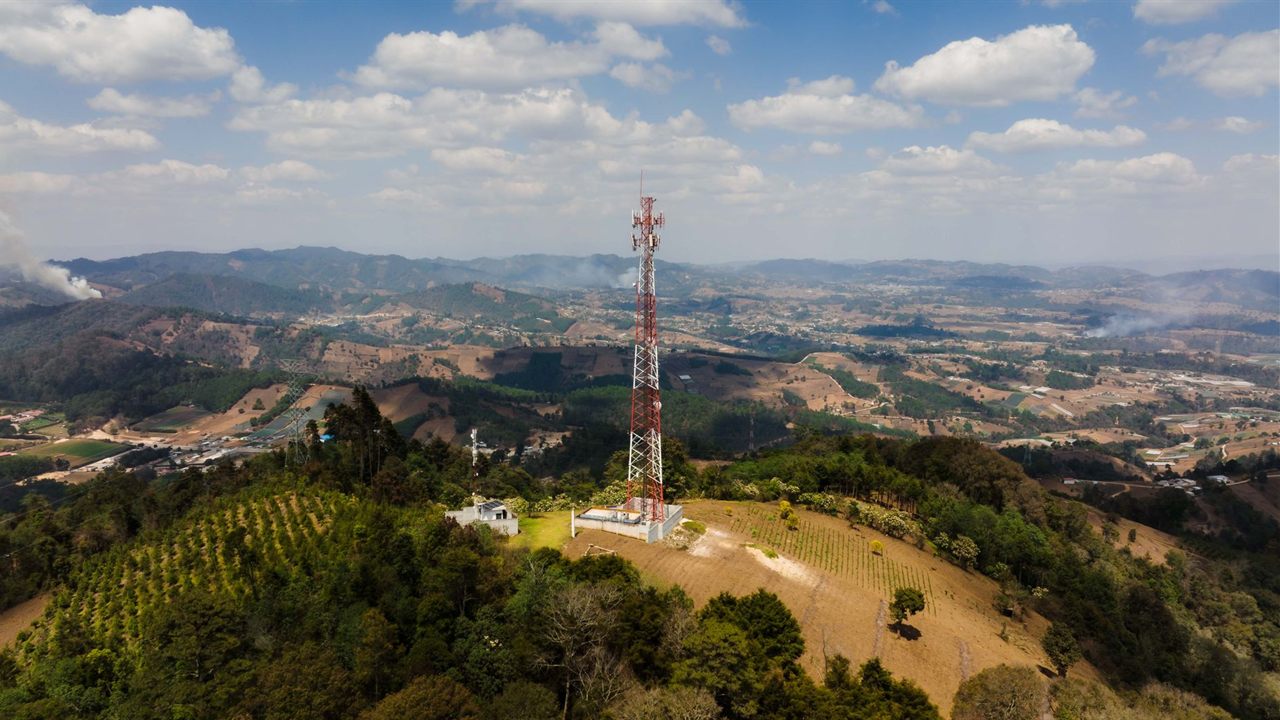
A fringe antenna feeding many rooms can need both: a preamp to set the noise figure and a distribution amplifier to cover a large split. Stacking them has a cost. The same UBC lecture notes that in a cascade the signal at the second amplifier’s input is higher than at the first, so the later stage’s handling of strong signals dominates.
Worked example, assuming the 15 dB preamp and 5 dB downlead above: every channel reaches the distribution amplifier 15 − 5 = 10 dB hotter than it would without the preamp. Near a strong transmitter, that is how a second amplifier tips into overload.
- Use the least gain that covers the measured losses, and prefer adjustable gain.
- Measure at the nearest and farthest TVs after installing, not only at the amplifier.
- If channels pixelate with healthy readings, remove one amplifier as a test before adding more gain.

Choosing a distribution amp for multiple TVs
Size a distribution amp for multiple TVs to the outlets and the losses, not to the biggest number on the box.
- Count outlets now and planned, and pick enough outputs; cap any spare with a 75 ohm terminator.
- Total the loss to the farthest TV. Assuming a 4-way at 7 dB and 3 dB on the longest run, about 10 dB of gain restores that TV to roughly the level at the amplifier input.
- Check the frequency range covers the TV bands in use.
- Check DC passing if a mast preamp’s power must travel through the unit.
For splitter loss per port and installation steps, see how to install a coax splitter. Long runs belong on RG6; our RG6 vs RG59 comparison explains why. Ground the downlead at the entry, ahead of any amplifier, as set out in how to ground a TV antenna.
Where to find preamps and antenna parts
The antenna preamps category lists mast preamplifiers, including dual-input VHF and UHF models, and the coax category lists RG6 reels, both in the antenna, tower and satellite division. For pricing and availability, ask your sales representative through the Bursma contact page, or apply for a Bursma dealer account.
Frequently asked questions
Do I need a preamp or a distribution amplifier?
Measure first. If the signal is weak at the antenna or the downlead is long, use a preamp. If the signal is healthy where it enters the house and the loss comes from splitting it to several TVs, use a distribution amplifier.
Can I use a preamp and a distribution amplifier together?
Yes, on fringe systems with large splits. Keep the total gain to what the losses need, because the distribution amplifier sees signals already raised by the preamp.
Where should a TV signal amplifier be placed?
Ahead of the loss it is meant to cover. A preamp goes on the mast, before the downlead. A distribution amplifier goes where the signal is split, before the runs to each room.
Can a TV signal amplifier make reception worse?
Yes. Too much gain near strong transmitters can overload the amplifier or the tuners, and channels pixelate even with healthy readings. Reduce the gain or remove the amplifier as a test.