

The mast is often bought by habit: whatever pipe is on the truck goes up, until a larger antenna, a rotor or a storm finds its limit. This guide answers what size pipe for antenna mast work the antenna, rotor and mount actually call for, how diameter and wall thickness change stiffness, and where steel, aluminum and telescoping masts fit.
What size pipe for an antenna mast?
Use the outside diameter that the antenna clamp, rotor and mount all accept, and the wall the mast maker rates for the load. Residential TV masts are commonly 1-1/4 or 1-1/2 inch OD galvanized steel. Larger antennas, rotors and exposed sites need a bigger diameter or thicker wall, because stiffness rises steeply with diameter.
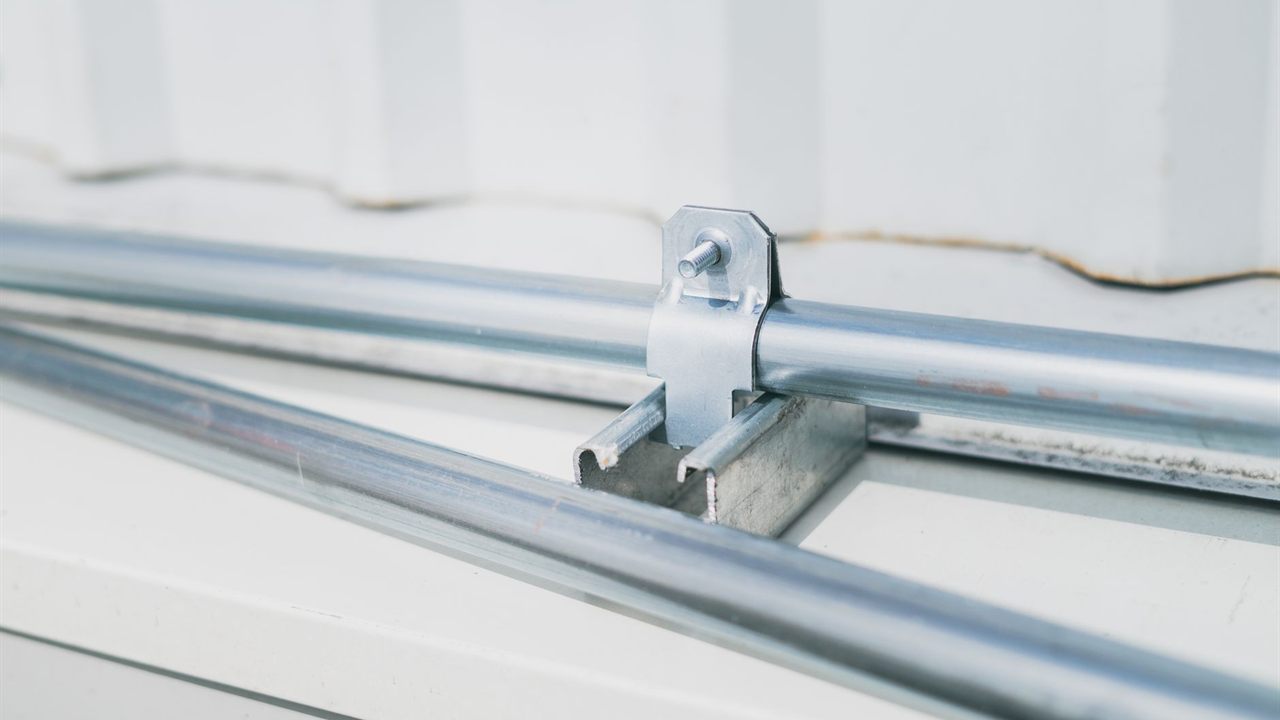
What size pipe for antenna mast work: start with the clamps
Three pieces of hardware grip the mast, and each one has a diameter range in its instructions:
- The antenna clamp: the U-bolt or saddle on the antenna boom. Too small a mast and it slips; too large and the U-bolt will not close.
- The rotor clamp: if a rotor is used, both its lower clamp and its upper mast clamp have a stated range.
- The mount: a tripod collar, wall bracket or chimney kit is sized for a mast diameter, as covered in how to install an antenna tripod.
The mast diameter is the one that sits inside all three ranges. A stronger mast that will not clamp is no use.
Watch the sizing trap. Mast tubing is sold by outside diameter, while plumbing pipe is sold by nominal size. Under the standard pipe dimension tables (ASME B36.10), pipe called 1-1/4 inch measures 1.660 inches outside, which is too large for many antenna clamps made for 1-1/4 inch OD mast. Installer forums report U-bolts that will not close around it.

Antenna mast pipe diameter and stiffness
Diameter is the strongest lever an installer has. For a thin-walled tube, bending stiffness grows with the cube of the diameter and only in direct proportion to the wall thickness. A worked example, assuming the same material and wall:
- 1-1/2 inch vs 1-1/4 inch OD: 1.5 / 1.25 = 1.2, and 1.2 cubed is 1.73, so about 73 percent stiffer.
- 2 inch vs 1-1/4 inch OD: 2.0 / 1.25 = 1.6, and 1.6 cubed is 4.10, so about four times as stiff.
Bending strength grows with the square of the diameter, so the 1-1/2 inch tube also carries about 44 percent more bending load before it yields, on the same assumptions. That is why stepping up a size usually does more than buying a heavier wall in the same size, provided the clamps accept it.

Galvanized mast pipe gauge
Steel mast tubing is described by gauge, and a lower gauge number means a thicker wall. Most residential sections are listed as 16 or 18 gauge.
- Thicker wall: at the same diameter, stiffness rises in proportion to wall thickness, and the tube resists denting where clamps and U-bolts bite.
- Swaged joints: swaged sections are made to slide into another section of the same diameter and wall, so buy joining sections to match rather than mixing stock.
- Coating: galvanizing protects the steel, but cut ends and drilled holes lose that protection; treat them with a zinc-rich touch-up coating.
If the antenna or rotor instructions name a minimum wall, that figure decides.

Galvanized steel vs aluminum masts
Aluminum is lighter and does not rust, but it is less stiff. The UC Berkeley PEER material properties list a modulus of elasticity of 29,000 ksi for steel and 10,000 ksi for aluminum. Since 29,000 / 10,000 = 2.9, an aluminum tube of the same size bends about 2.9 times as far under the same wind as a steel one.
So an aluminum mast needs a larger diameter or a heavier wall to match a steel mast, which may push it outside the clamp ranges. Where aluminum and steel hardware touch, keep moisture out of the joint to limit corrosion. Bond either type the same way, as set out in how to ground a TV antenna and mast.
| Option | Stiffness | Watch for | Best fit |
|---|---|---|---|
| Galvanized steel mast, 1-1/4 in OD | Baseline | Gauge; clamp ranges | Light antennas on short masts |
| Galvanized steel mast, 1-1/2 in OD | About 1.7x baseline at the same wall | Antenna and rotor clamp fit | Larger antennas, rotors, exposed sites |
| Aluminum tube, same size | About 0.35x the steel tube | Needs a bigger section; mixed metals | Light loads where weight matters |
| Nominal plumbing pipe or fence rail | Varies with size and wall | OD may not match clamps; not rated as mast | Only where the hardware maker approves it |

Wind load grows with antenna size and wind speed
The pipe has to resist the wind on everything above its top support. The NASA drag equation shows how that force scales: it is proportional to the area facing the wind and to the square of the wind speed.
- Area: an antenna with twice the wind area puts twice the force on the mast. Antenna makers publish a wind area or wind load for each model; add a second antenna or a dish and the areas add.
- Speed: a 90 mph gust against a 70 mph one gives 90 / 70 = 1.29, and 1.29 squared is about 1.65, so about 65 percent more force.
- Leverage: the bending load at the top support is the force times its height above that support. An antenna 6 feet above the clamp loads the mast three times as hard as one 2 feet above it.
Add those together and a mast that suits a small antenna can be badly undersized for a large array on the same mount. Compare the antenna’s published wind load with what the mast, rotor and mount makers rate. Whether the extra height is worth that load is covered in how high to mount a TV antenna.

Telescoping masts
A telescoping mast nests several tubes of decreasing diameter, so the base section is the largest and the top section the thinnest. That top section, carrying the antenna, is the weak point.
- Use the antenna load and extended height the mast maker states for that model.
- Lock every joint with the pins or clamps supplied before raising it.
- Fit guys at each level the instructions call for; the method is in how to guy an antenna mast.
If the site needs more height than a telescoping mast is rated for, a tower is the safer route; guyed vs self-supporting tower compares the options.
Rotors and the mast above them
A rotor moves the load question up the mast. The short stub above the rotor carries the antenna, and the rotor maker states the diameter range its mast clamp accepts and the load it can turn. Size the stub to that range, not to the main mast. For when a thrust bearing is needed, see do I need an antenna rotor.
Where to find mast and mounting hardware
The antenna mast category lists 1-1/4 and 1-1/2 inch mast sections in 5 and 10 foot lengths, and the Antenna - Tower - Satellite division lists tripods, mounts, rotors and towers. If you are still choosing a mount, read roof tripod vs antenna mast. For pricing and availability, ask your sales representative through the Bursma contact page or the Columbus, Ohio branch, or open a Bursma dealer account.
Frequently asked questions
What diameter is a standard TV antenna mast?
Residential masts are commonly 1-1/4 or 1-1/2 inch outside diameter. The right one is the size that fits the antenna clamp, the rotor clamp and the mount.
Is 16 gauge or 18 gauge mast better?
16 gauge has the thicker wall, so it is stiffer and resists clamp damage better at the same diameter. Follow the antenna or mount maker if they specify a gauge.
Can I use fence top rail or plumbing pipe for an antenna mast?
Only if its outside diameter fits every clamp and the hardware maker approves it. Nominal pipe sizes do not match mast sizes, and fence rail is not rated for antenna loads.
Is an aluminum antenna mast strong enough?
For light loads it can be, but aluminum is about one third as stiff as steel, so it needs a larger or heavier tube to match a steel mast of the same size.