

Every outdoor antenna job starts with one question before the first lag goes in: what holds the mast up? A search for roof tripod vs antenna mast suggests two competing products, but a tripod is a mast support, not a substitute for a mast. The real decision is whether the mast stands on the roof, rides up the wall or eave, straps to a chimney or gets its own tower. This guide sorts those antenna mounting options by height, roof penetrations and wind load so you can quote the right hardware.
What is the difference between a roof tripod and an antenna mast?
A roof tripod is a three-legged base that lags to the roof framing and holds a short mast upright; the antenna mast is the pipe itself. Use a tripod when the antenna must clear the ridge and the roof can take lags. Use a wall or eave mounted mast to avoid roof penetrations, and guy any mast that rises more than about 10 feet above its top support.
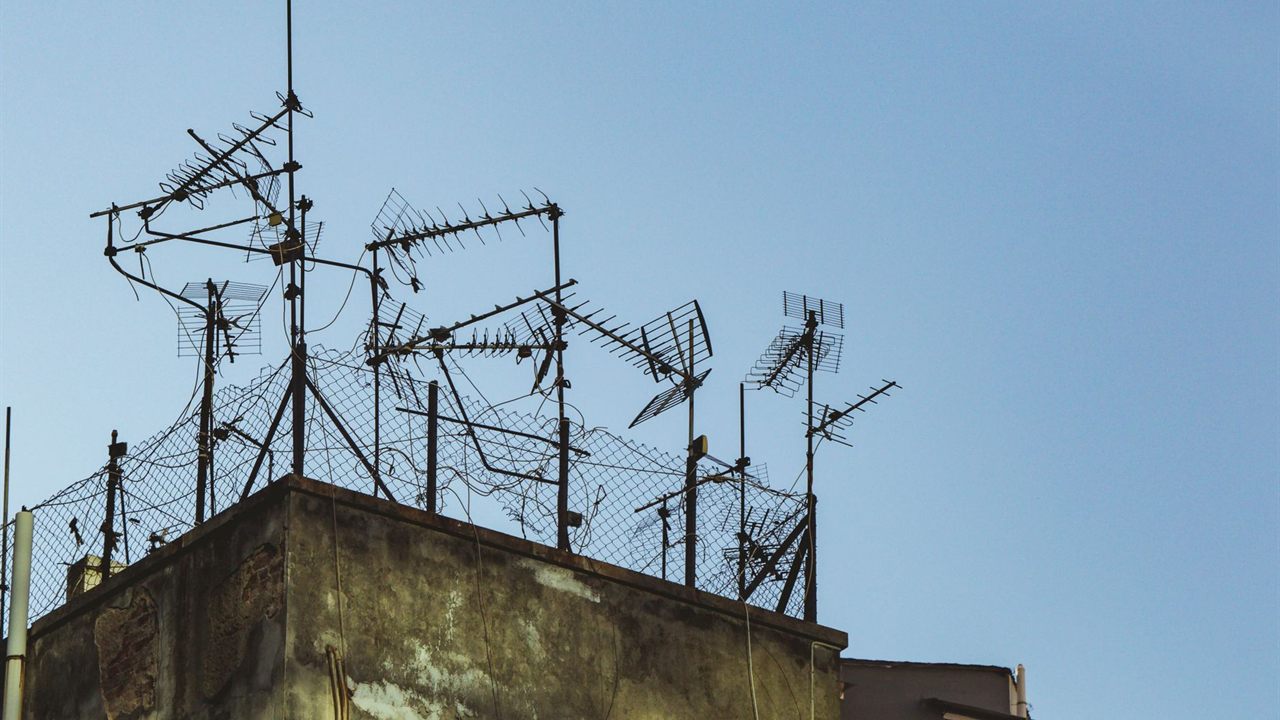
Roof tripod vs antenna mast: what each part does
The mast is the steel tube that carries the antenna, the rotor if there is one, and often the preamp. Residential mast is usually 1-1/4 or 1-1/2 inch outside diameter in 5 and 10 foot lengths, and on its own it cannot stand. It needs a base: a tripod, a pair of wall brackets, a chimney strap kit or a tower section.
A tripod is three legs joined at a collar, with feet that lag through the roof deck into the framing. Short 3 foot tripods suit a light antenna on a short mast, while 5 foot, wide-spread and 10 foot tripods spread the load for bigger arrays and taller masts. So the question installers really answer is roof support versus wall support, and the mast is part of both.

Antenna mounting options compared
Treat the heights below as planning ranges and confirm exact limits against the hardware ratings.
| Mount | Roof holes | Height above support | Best for |
|---|---|---|---|
| Roof tripod | Yes, one lag set per foot | Short mast; guy past about 10 feet | Clearing the ridge, trees and neighbouring houses |
| Wall or eave brackets | None | Mast runs past the eave; guy if long | New roofs, easy service from a ladder |
| Chimney strap kit | None | Short mast only | Sound masonry chimneys and light antennas |
| J-mount or universal mount | Usually, or into fascia | A few feet, fixed | Small antennas and dishes with good line of sight |
| Tower with house bracket | None (bracket to wall) | Tallest option | Fringe reception, heavy arrays, rotors |

When a roof tripod is the right call
A tripod wins when height above the roof matters most. Set on or near the ridge, it lifts the antenna clear of the roof surface, the house’s own shadow and nearby obstructions, and it keeps the mast well away from the eaves and the service drop.
Check these conditions before you commit to a tripod:
- The roof is asphalt shingle over solid decking. Tile, slate and metal need specialist flashing.
- Rafters or trusses sit under each foot, or you can add blocking from the attic.
- The antenna, rotor and mast weight sit within the tripod’s rating.
- The unsupported mast above the collar stays short, or you plan to guy it.
Bursma’s roof tripods for antenna masts range from 3 foot tripods supplied with pitch pads and lags to a heavy duty 5 foot model, a 5 foot wide-spread base and a 10 foot tripod. Pair them with 1-1/4 and 1-1/2 inch antenna mast sections sized to the tripod collar and the antenna clamp.
When a wall mount for a TV antenna is better
A wall or eave mount puts no holes in the roof field, which matters on a new roof or when the owner will not allow roof work. The mast runs up the gable end or side wall in two brackets, with the top bracket just under the eave. The antenna stays serviceable from a ladder.
Space the brackets as far apart as the wall allows, because the gap is what resists the antenna’s leverage on the top bracket. Lag into studs, the rim joist or added blocking, never into siding or sheathing alone. Above the top bracket the same guying logic applies as on a tripod.
Chimney straps also avoid roof holes, but only on sound masonry with a light antenna, and they loosen in wind. Small antennas and dishes can also sit on a universal home mount or J-mount where little height is needed.
Height, guying and the FCC 12 foot rule
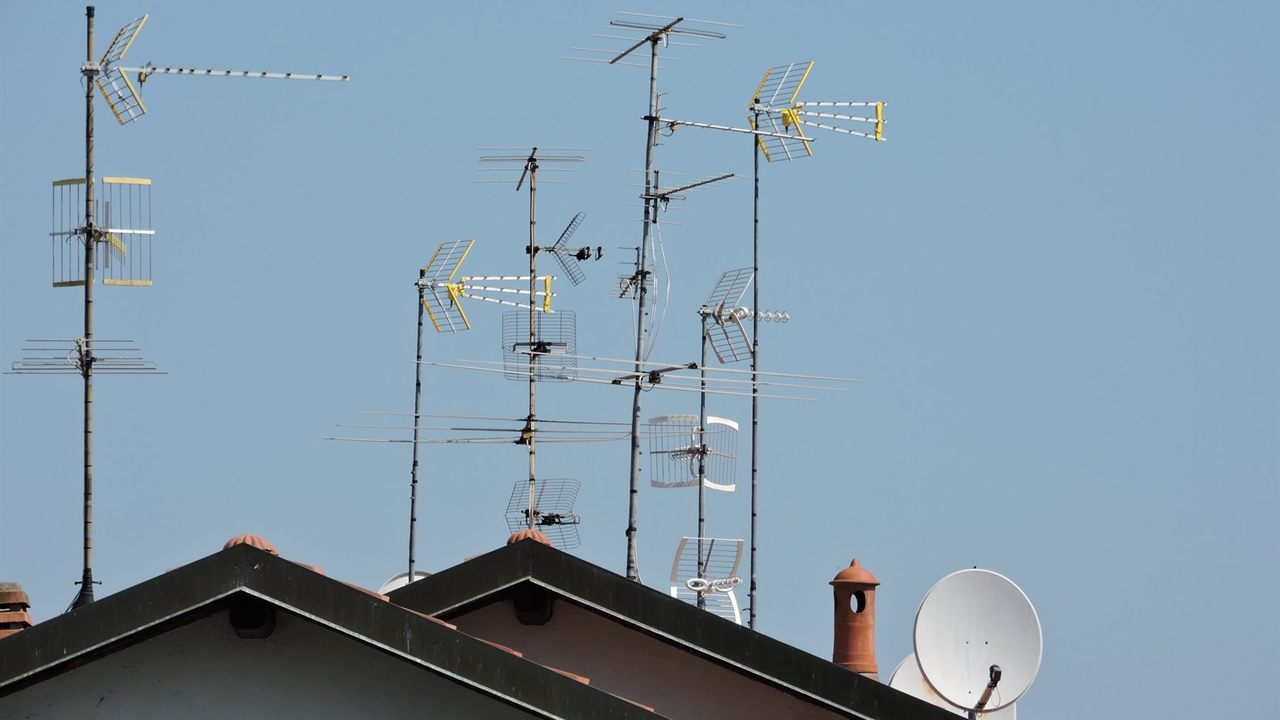
A widely used field rule is to guy any mast that rises more than about 10 feet above its top support. Use three guys about 120 degrees apart, a guy ring on the mast and anchors driven into framing, not into shingles or gutters. When the job needs real height, a tower section with a house bracket is usually safer than stacking mast.
Height also has a legal edge. Under the FCC Over-the-Air Reception Devices rule, a local government, community association or landlord may require a safety permit when a mast extends more than 12 feet above the roofline, and the permit should be granted when the safety requirements are met. The rule covers only the area the viewer owns or has exclusive use of.
Before you stand anything up, check the fall radius. If the mast came down, it must not reach the service drop or any power line.
Installing a tripod without leaks
Most tripod complaints are roof leaks, not wind failures.
- Find the rafters or trusses from the attic. Tripod legs usually adjust to land on 16 or 24 inch centers.
- Add blocking between framing members wherever a foot misses.
- Set the pitch pads, bed each foot in roofing sealant and drive the lags through the deck into wood.
- Seal every lag head and slip a flashing piece under the shingle course above each foot where you can.
- Plumb the mast, tighten the collar bolts, then add guys if the mast is long.
- Form a drip loop in the coax and bond the mast as described in our guide on how to ground a TV antenna and mast.
Roof safety before you climb
Ladder setup causes as many problems as the mount. OSHA’s construction ladder standard, 29 CFR 1926.1053, requires a portable ladder used to reach a roof to extend at least 3 feet above the landing, or to be secured at the top with a grab point.
Plan fall protection for any work near the roof edge, skip wet or frosty roofs, and never lift a long mast near power lines.
Where to buy tripods, masts and mounts
All of this hardware sits in the Antenna - Tower - Satellite division: tripods, mast, mounts, towers, antenna rotors and outdoor TV antennas. For the signal side of the same job, see our guides on choosing an antenna preamplifier and RG6 vs RG59 coax for antenna runs.
Bursma Distributing is a wholesale distributor that has served dealers and installers since 1947. Dealers see their own pricing and stock in Shop Online after logging in, and new installers can open a Bursma dealer account. Our Wyoming, Michigan branch near Grand Rapids and the Columbus branch both take calls from dealers.
Frequently asked questions
Do I need a tripod for a TV antenna?
Not always. A tripod is the right base when the antenna has to sit above the ridge and the roof framing can take lags. If you can get enough height from the side of the house, wall or eave brackets do the same job without roof penetrations.
How tall can an antenna mast be without guy wires?
A common field rule is about 10 feet of mast above the top support before you add guys. Follow the hardware ratings when they are stricter.
Can a TV antenna be mounted on the side of a house?
Yes. A wall mount for a TV antenna uses two brackets lagged into studs or the rim joist, with the mast running past the eave.
Does a roof tripod cause leaks?
Only when the feet are poorly sealed or miss the framing. Pitch pads, sealant under each foot, sealed lag heads and flashing under the shingle course above keep a tripod watertight for the life of the roof.