
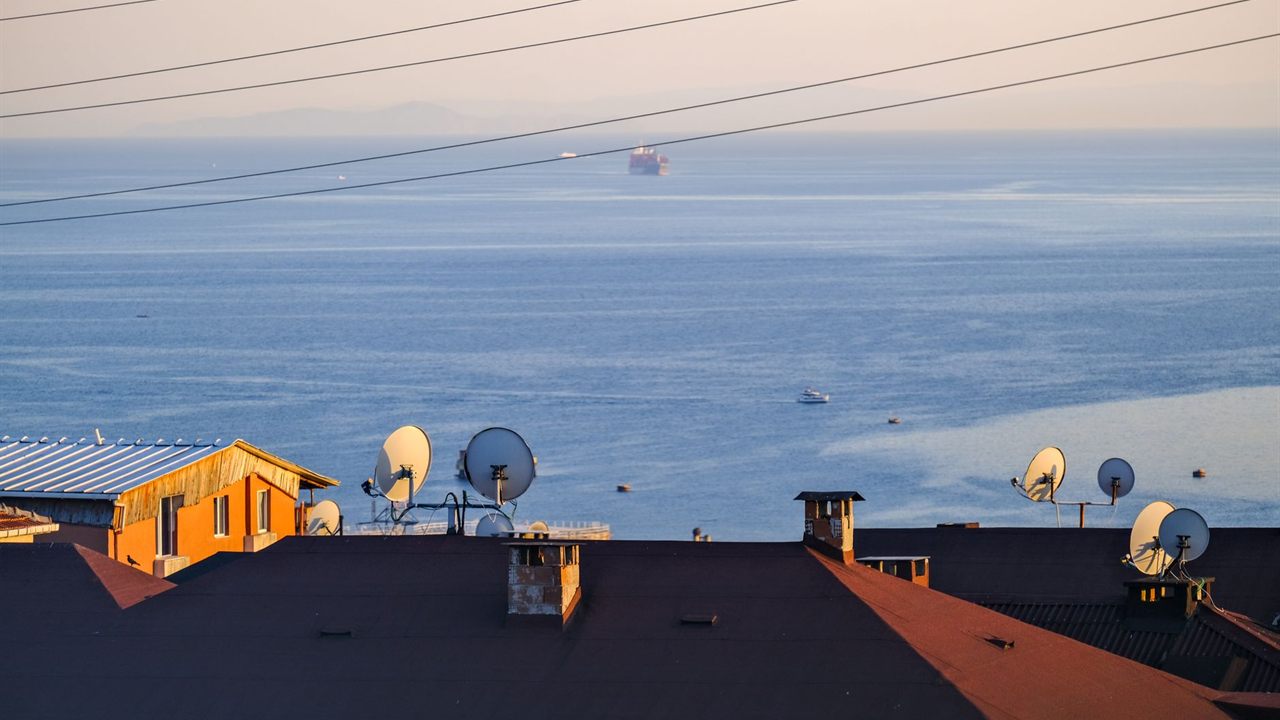
When a household drops satellite service, the dish usually stays on the roof, and the obvious question is whether it can pull in free local channels. Using a satellite dish as TV antenna hardware does not work, but much of the installation around it can be reused. This guide explains why the dish itself cannot do the job, what to keep, what to remove and how to point the new antenna.
Can you use a satellite dish as a TV antenna?
No. A satellite dish as TV antenna will not work: the dish and its LNB are built for satellite signals around 12 GHz, aimed at the southern sky, while local stations broadcast between 54 and 608 MHz from towers on the ground. You can often reuse the mount, the RG6 coax and the grounding block, then fit a real TV antenna.

Why a satellite dish cannot receive broadcast TV
Three things stop the dish from working, and none of them can be fixed with an adapter.
Frequency
US direct broadcast satellite downlinks use the 12.2 to 12.7 GHz band. Local TV channels sit far lower: VHF from 54 MHz and UHF up to 608 MHz, as our UHF vs VHF antenna guide sets out from the FCC channel table. The satellite band is about 20 times higher than the top TV channel.
The LNB
The part on the arm in front of the dish is the LNB (low-noise block downconverter). It receives only the satellite band, amplifies it and converts it to a lower intermediate band for the coax, which is still far above TV channels. It has no way to receive or pass a UHF or VHF broadcast.
Focus and size
The dish is a reflector that focuses signal onto the LNB. To reflect a signal usefully, a reflector must be large compared with the wavelength. At UHF channel 14 the wavelength is about 0.63 m, so a typical home dish, often under a meter across, is only about one wavelength and barely acts as a reflector at all. Bolting a TV antenna to the dish face gains nothing meaningful.
The dish is also pointed at a satellite high in the sky, while broadcast towers are on the horizon. The word “dish” covers other gear too: the point-to-point wireless dishes in our dish vs panel antenna comparison are a different product for data links, not TV.
What you can reuse from the satellite install
The parts below often carry over to an over-the-air system. Inspect each before you count on it.
| Part | Verdict | Why |
|---|---|---|
| Dish and LNB | Remove | Satellite band only |
| Mount and short mast | Reuse if solid | Check diameter, height, fasteners |
| RG6 coax runs | Usually reuse | 75 ohm, shielded; check for water |
| Grounding block | Reuse | Same job for an antenna |
| Splitters | Reuse only if rated | Must cover the TV band and pass signal cleanly |
| Multiswitch, diplexer, power inserter | Remove | Built for satellite; may block OTA or carry DC |
Reuse satellite dish mount for antenna
A dish mount is a short mast on a foot plate, usually lagged to a wall, fascia or roof. It can carry a small or mid-size antenna if three things check out:
- Diameter: the mast must fall within the antenna’s clamp range on its spec sheet.
- Height: dish mounts are short and often low on a wall, where buildings and trees block the towers. Our guide on how high to mount a TV antenna explains why height and a clear path to the towers matter.
- Condition: rusted lags, a loose foot or cracked sealant mean a new mount, from the antenna mounts category, rather than a repair.
A large antenna has more wind load than a small dish. If the antenna needs more height or area than the dish mount can carry, use a proper mast, tripod or wall bracket instead.
Coax and grounding
Satellite installs are run in RG6, which is also the right cable for an antenna, as our RG6 vs RG59 comparison explains. Check each run for crushed sections, corroded connectors and water in the cable, and re-terminate any doubtful ends. The coax grounding block at the building entrance stays in service; confirm its bond to the building grounding system is intact, as described in how to ground a TV antenna.
Removing the old dish
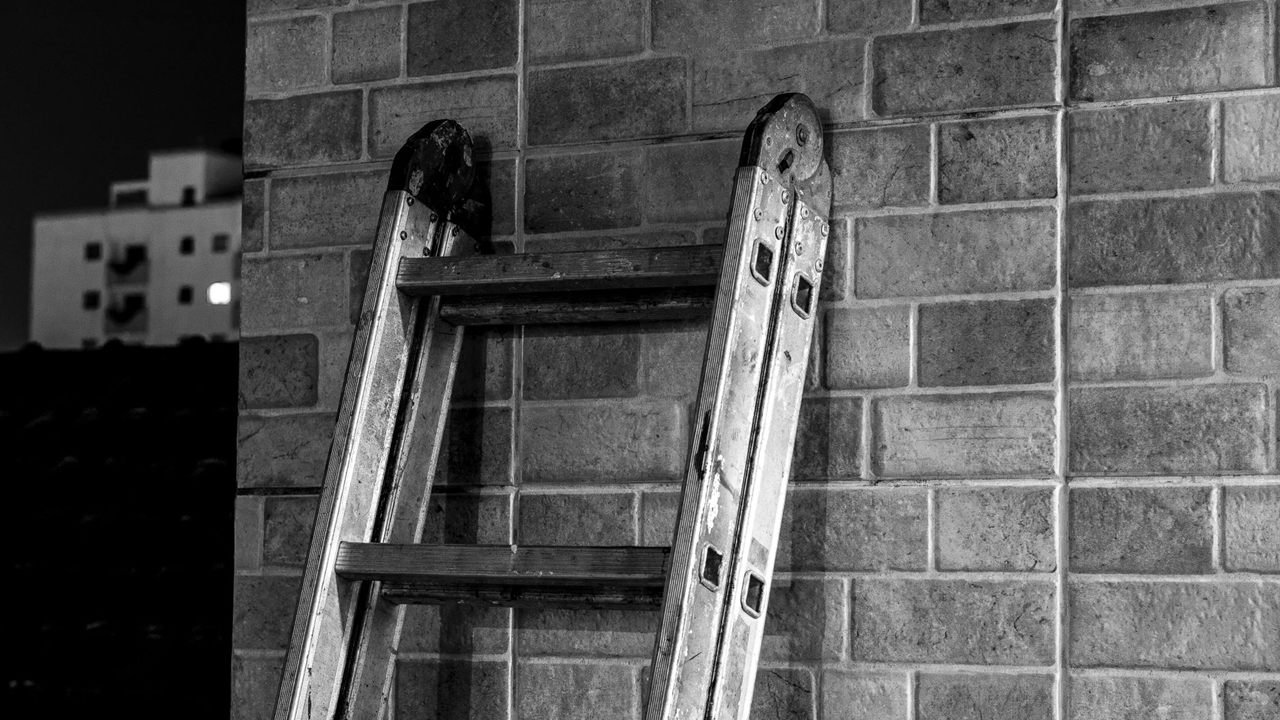
Check the old service agreement first: leased equipment may need to go back to the provider. Then take the dish down from a safe ladder or roof position:
- Unplug the satellite receiver and any power inserter indoors, then disconnect the coax at the LNB and the ground wire at the mount.
- Unbolt the dish from the mast, then the mount if it is not being reused.
- Fill or seal every lag hole in the roof, fascia or siding so water cannot get into the framing.
The FCC protects a resident’s right to put up a broadcast antenna on property they own or control. Its guide to installing consumer-owned antennas and satellite dishes explains the OTARD rule: it covers dishes 1 meter or less and TV antennas of any size, while masts more than 12 ft above the roofline may need a local permit.
Replace satellite dish with antenna: what to remove
Satellite systems hide parts that look harmless but stop an antenna signal. Antenna reception forums report cases where an unpowered distribution block stopped all over-the-air reception until it was bypassed.
- Take out any power inserter. It sends DC up the coax to the LNB and should not feed an antenna or a TV tuner.
- Trace every run from the old dish location to each TV and note each device inline.
- Remove multiswitches and diplexers. They resemble splitters but are built for satellite frequencies and wiring.
- Keep a splitter only if its rating covers the TV band. If in doubt, replace it, following our guide on how to install a coax splitter.
- Join the runs with a new splitter or a distribution amplifier sized to the number of TVs.
Aiming the new antenna
The new antenna is aimed very differently from the dish. Satellite dishes in the US look up toward the southern sky; a TV antenna looks toward the horizon, at towers that may be in any direction.
- Find the station bearings and channels before choosing the antenna; our UHF vs VHF guide explains why the RF channel decides the antenna design.
- Follow the steps in how to aim a TV antenna: rough bearing, fine tuning with a signal meter, then a full rescan.
- Rescan every TV after the antenna is connected; channels found with the old wiring will not carry over.
Where to find antennas and mounting hardware
The outdoor TV antennas category lists UHF and combination designs, and mounts, mast and RG6 are in the Antenna, Tower and Satellite division. For pricing and availability, ask your sales representative through the Bursma contact page or the Columbus, Ohio branch, or open a Bursma dealer account.
Frequently asked questions
Can I mount a TV antenna on my satellite dish pole?
Often, yes, once the dish is off. Check that the pole fits the antenna’s clamp, that it is solidly fastened and that it is high enough to see the towers.
Can I use satellite coax for an antenna?
Yes, if it is RG6 in good condition. Remove multiswitches, diplexers and power inserters from the runs first.
Do I have to remove my old satellite dish?
No, but it gives the antenna no benefit. Removing it frees the mount and lets you seal any holes it leaves.
Why does my antenna not work through the old satellite wiring?
A satellite device is usually still inline, often a multiswitch, diplexer or distribution block. Bypass it with a TV-band splitter and rescan.