

The client wants the screen centered on the fireplace wall, and the stud finder says the studs are in the wrong place, made of steel, or not there at all. You can mount a TV without studs in the right spot, but each method has limits, and some walls should get a different answer altogether. This guide works through the options and says when to turn the job down.
Can you mount a TV without studs?
You can mount a TV without studs by reaching the studs another way: a wide wall plate that spans them, a backer board fixed across them, or blocking added inside the wall. Heavy-duty toggle anchors in drywall suit only light TVs on fixed mounts, within the anchor and mount makers’ ratings. Never put a full motion arm on drywall alone.

Before you mount a TV without studs: what is behind the wall?
“No studs” usually means one of three things, and each has a different fix:
- Studs in the wrong place: the framing is wood and sound, but not where the screen needs to sit.
- Steel studs: common in commercial buildings and some apartments. A magnetic stud finder or a test hole confirms them.
- Plaster and lath, or a furred-out wall: older homes, or drywall on strips over masonry, where the studs are hard to read.
Confirm with a small test hole that a TV will later hide, and check for cable, pipe and duct before drilling. If the wall turns out to be brick or block under the drywall, switch to the methods in our guide on how to mount a TV on a brick wall.
Off-center studs: wide plate or sliding mount
When wood studs exist but sit to one side, the strongest answer is still to reach them. Two mount designs help:
- Wide wall plate: a plate long enough to catch two studs, with the TV hung anywhere along its rails. The fasteners stay in wood while the screen moves sideways.
- Sliding or offset arm: on full motion mounts, a cantilever arm can be fixed to off-center studs and extended to center the screen. Every inch of offset adds leverage on the top fasteners, so check the maker’s rating at that position.
The trade-offs between fixed, tilting and full motion mounts are covered in TV wall mount types.

Toggle bolts for a TV mount in drywall
Toggle bolts and snap toggles open behind the drywall and clamp the board between the wings and the mount. They are the strongest fasteners for hollow drywall, far stronger than plastic expansion plugs, which should never carry a TV.
The weak point is the drywall itself. A toggle can only hold what the gypsum around it holds, and an overloaded board crumbles or tears out around the anchor. Published load figures vary widely between makers, wall thicknesses and anchor sizes, so this guide gives none. Use the rating the anchor maker publishes for that anchor in that board, and confirm the mount maker allows anchors in drywall at all.
- Use only fixed or low-profile tilting mounts on drywall anchors, never a full motion arm.
- Use every hole the plate provides, spaced as far apart as the plate allows.
- Drill the size the anchor maker specifies; an oversized hole weakens the grip.
- Do not overtighten: crushing the gypsum lowers the hold.
If one anchor lands on a stud and the rest in hollow wall, fasten that one into the stud with the proper screw or lag and treat the toggles as extra, not as the main support.

TV mount on metal studs
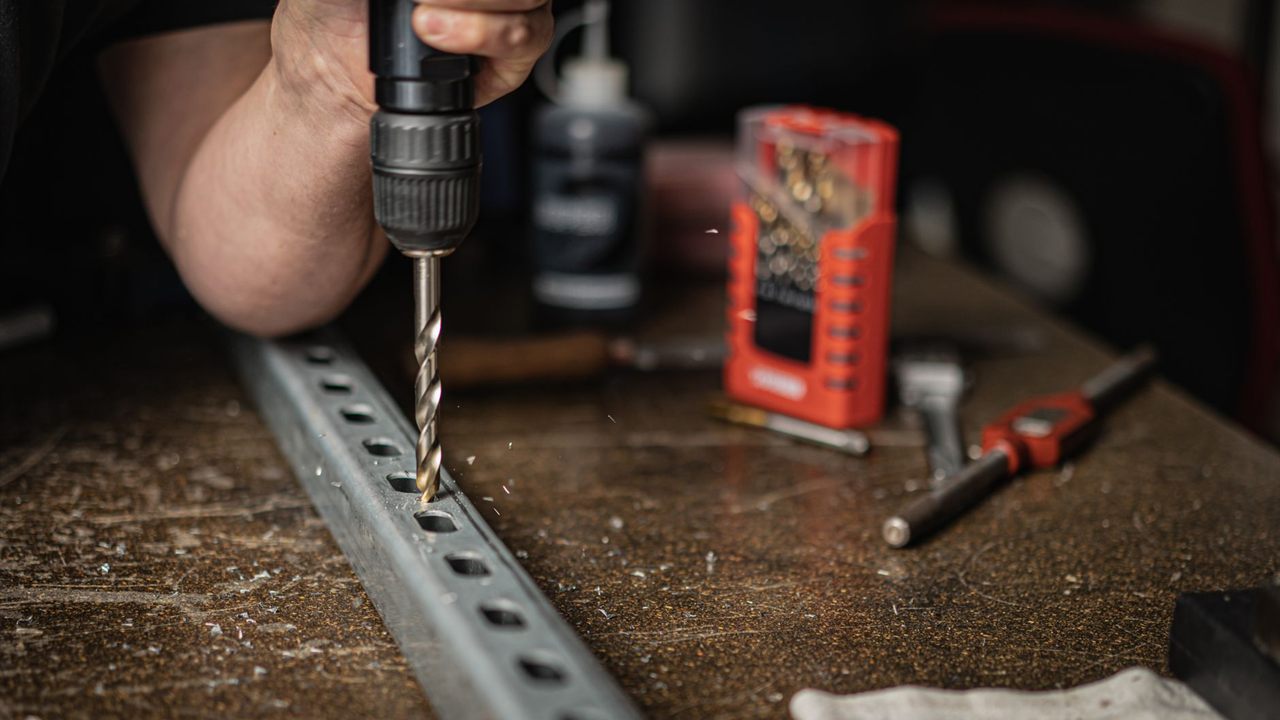
The lag bolts supplied with most mounts are for wood studs and concrete. They will not hold in a steel stud. Two approaches work:
- Toggles through the stud face: snap toggles or toggle bolts drilled through the drywall and the steel flange, so the wings bear on the back of the stud. Many mount makers sell steel stud kits built this way; use the kit approved for that mount.
- A backer board: fix a board across two or more steel studs with the kit hardware, then mount the TV plate to the board. This spreads the load over more fasteners and studs.
A heavy panel or a long full motion arm on light-gauge steel studs is a job to check with the mount maker first.
| Method | Holds via | Suits | Avoid for |
|---|---|---|---|
| Wide or sliding wall plate | Existing wood studs | Off-center studs, most mounts | No studs within reach |
| Toggle anchors in drywall | The drywall | Light TVs, fixed mounts | Full motion arms, heavy panels |
| Steel stud kit | Steel stud flanges | Commercial and steel-framed walls | Long arms unless the maker allows |
| Backer board across studs | Studs, through the board | Centering, heavier TVs | Clients who refuse a visible board |
| Blocking inside the wall | New framing | Full motion, best result | Finished walls the owner will not open |
Spreader plates and backer boards
A backer board, or a mount maker’s spreader plate, turns two studs into a wide fixing area. It is fastened into the studs, and the TV plate is fastened to it anywhere along its width. The studs still carry the load; the board only moves it sideways.
- Size the board to reach at least two studs and use the fasteners the mount instructions specify.
- Plan cable entry before fixing it, because a board over the drywall changes where the wall plate sits. See how to hide TV wires in the wall.
Adding blocking inside the wall
When the wall can be opened, blocking is the cleanest and strongest result. Cut the drywall between the studs at mount height, fit solid wood blocking between them, fasten it to the studs, then patch and finish the wall. The mount screws into the blocking wherever the screen needs to be.
It costs a drywall repair, so it suits new construction, a renovation or a client who wants a full motion arm in the middle of a bay. Agree the patch and paint with the owner before cutting. The same approach, applied to joists, is covered in our ceiling TV mount installation guide.
Plaster and lath walls
Plaster is brittle, and lath behind it is thin wood strips, not structure. Toggles in plaster can crack the surface around the hole, and neither plaster nor lath should carry a TV on its own. Find the studs, drill carefully to avoid cracking, and use a wide plate or backer board to reach them.
When not to mount without studs
Some jobs should stop at the survey:
- A full motion arm with no framing within reach and no permission to open the wall.
- A heavy panel where the anchor and mount ratings do not clearly cover the TV plus mount.
- Crumbling plaster, water-damaged drywall or a wall that flexes when pushed.
- Homes with small children where the screen will be pulled on, unless the mount is in framing.
The US Consumer Product Safety Commission advises households who wall-mount a flat screen to consider professional installation and avoid homemade brackets that might not suit the TV. For installers, that means the maker.s mount and hardware, not improvised parts. A soundbar under the TV adds weight, so include any attached accessory in the load.
Where to find TV mounts
The TV mounts category is in the Audio and Video division. For pricing and availability, ask your sales representative through the Bursma contact page or the Columbus, Ohio branch, or open a Bursma dealer account.
Frequently asked questions
Are toggle bolts strong enough for a TV mount?
For a light TV on a fixed mount, within the anchor maker’s published rating for that drywall, they can be. They are never right for a full motion arm on drywall alone.
How do you mount a TV on metal studs?
Use toggles through the stud face, ideally the mount maker’s steel stud kit, or a backer board fixed across several studs. Standard lag bolts will not hold in steel.
What if the studs are not where I want the TV?
Use a wide wall plate that slides the TV along its rails, a backer board across the studs, or blocking added inside the wall.
Can I mount a TV on plaster walls?
Yes, but into the studs behind the plaster, never the plaster or lath alone.