

Brick looks like the strongest wall in the house, and often it is, but a TV mount on brick fails in different ways from one on studs. Holes land in a core, anchors crack a brittle face, or soft old mortar lets a full motion arm creep. This guide covers how to mount a TV on a brick wall: reading the wall, the brick or mortar decision, masonry anchors for a TV mount, dust control and the fireplace questions customers always ask.
How do you mount a TV on a brick wall?
Identify the wall type first, then choose sleeve, wedge or screw anchors whose listing covers that base material and load. Drill with a hammer drill and masonry bit into sound brick or mortar as the anchor maker allows, collect the dust, clean each hole, set the anchors to the stated torque and test the plate before hanging the screen.
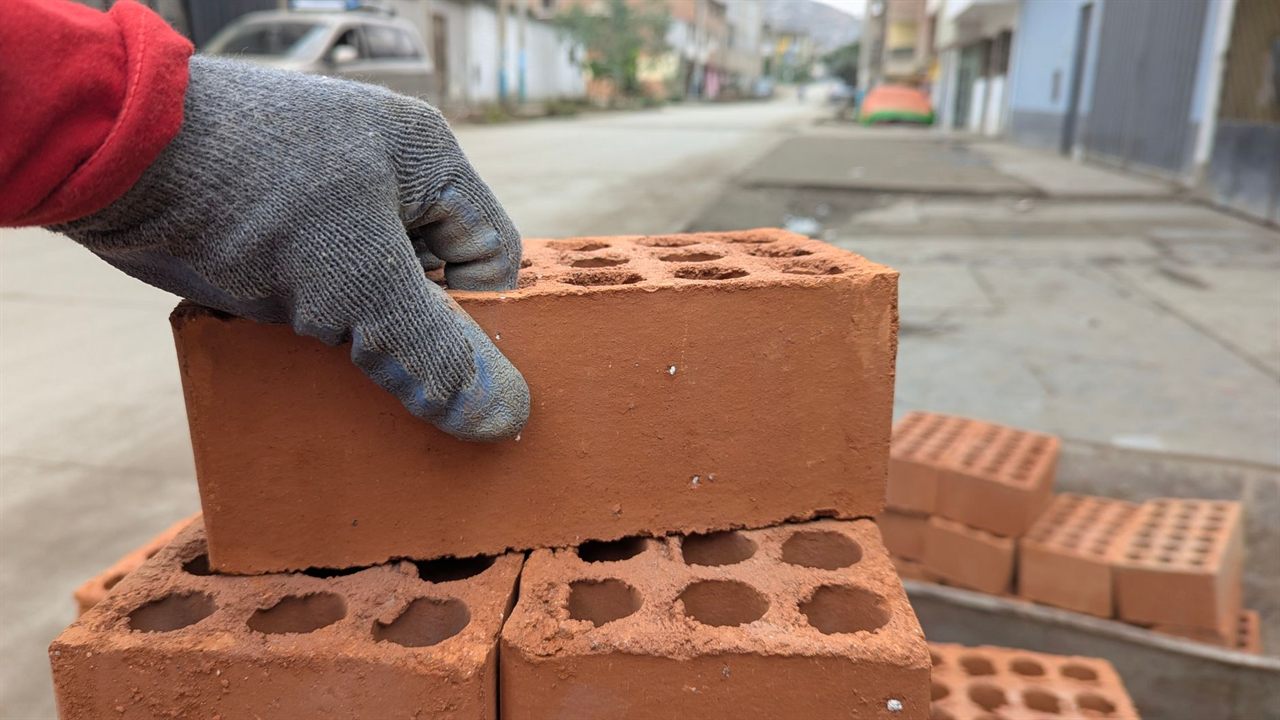
Before you drill: what kind of brick wall is it?
The same face of brick can hide very different walls, and the anchor has to suit what is behind it.
- Solid brick: the Brick Industry Association defines solid brick as units whose holes or voids are no more than 25 percent of the bed area. Many solid units are still cored, so a deep hole can break into a void.
- Hollow brick: voids above 25 percent of the bed area. These need fasteners made for hollow units.
- Brick veneer: a single layer of brick tied to the framing, usually with an air space behind it. The anchor’s full embedment has to stay inside that layer.
- Chimney breast: often several layers deep with a flue behind. Drill only as deep as the anchor needs.
Look at the wall’s edge, an outlet cut-out or the attic side of a chimney to see the build. A test hole in a spot the plate will cover shows whether the bit breaks into a core.
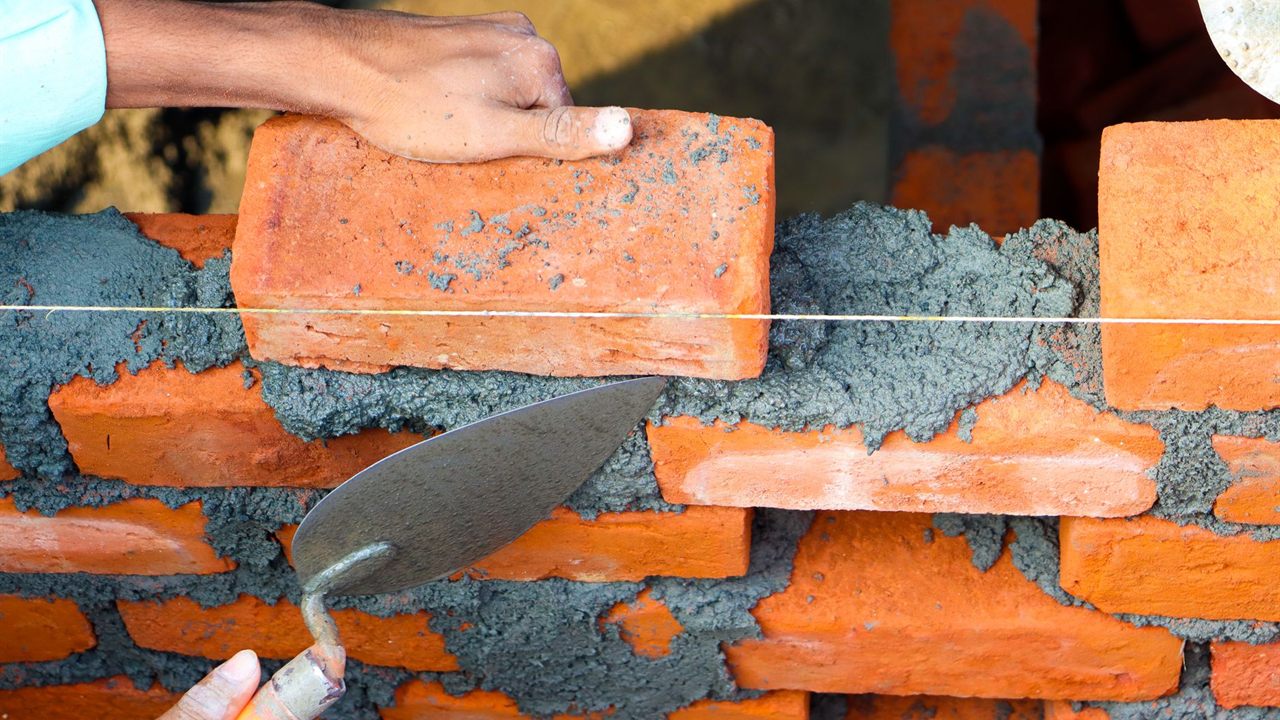
Drill into brick or mortar?
On this question the sources genuinely differ. Many current installer guides say to drill the brick face, because mortar is softer and old joints can crumble. The Brick Industry Association’s Technical Notes 44A, Fasteners for Brick Masonry, says the opposite for solid masonry: small sleeve anchors, wedge anchors, screws and lag shields are usually installed in mortar joints.
A mortar joint is easy to patch when the TV comes down, while a brick face can spall if an anchor sits too close to its edge. Old, soft or recessed mortar may not grip at all.
A practical rule that fits both:
- Test the mortar with a screwdriver. If it scratches out easily, use the brick.
- Keep anchors away from brick edges by the distance the anchor listing states.
- Split the anchors across at least two courses, so no single brick or joint carries the whole plate.

Masonry anchors for a TV mount
BIA’s note bases fastener selection on four things: the type of brick, the weight of the attachment, the exposure and the appearance. For a TV, the first two decide it.
| Anchor | How it holds | Suits | Watch for |
|---|---|---|---|
| Sleeve anchor | Sleeve expands as the nut tightens | Solid brick, sound mortar, some hollow units | Over-tightening can crack brittle brick |
| Wedge anchor | Clip wedges against the hole wall | Solid masonry with full embedment | Not for hollow or cored units |
| Masonry screw | Threads cut into the masonry | Solid brick and mortar, removable | Pilot bit size must match exactly |
| Toggle or hollow wall fastener | Spreads behind the face | Hollow brick and block cells | Check the listing for that unit type |
Never rely on plastic plugs for a TV. Use the load values in the anchor’s own listing for the material you are drilling, at the stated embedment and edge distance. Many makers publish ultimate values and tell you to apply a safety factor, so use the allowable figure, not the headline number.

Why the top anchors matter: leverage on full motion mounts
A fixed mount mostly loads its anchors in shear. A full motion arm adds leverage that pulls the top anchors straight out of the wall. Here is a simplified worked example, ignoring the mount’s own weight and assuming the plate pivots about its bottom row:
- TV weight 60 lb, with its centre 20 inches from the wall at full extension.
- Top and bottom anchor rows 12 inches apart, two anchors per row.
- Pull on the top row: 60 x 20 / 12 = 100 lb, so about 50 lb per top anchor.
- The same TV on a fixed mount 2 inches off the wall: 60 x 2 / 12 = 10 lb on the top row.
That tenfold difference is why the mount and the anchors both need headroom on an articulating job. Choosing among mount styles is covered in our guide to TV wall mount types.
Mount TV on brick wall: step by step
- Locate the TV height and the plate position, then mark the holes with a marker, since pencil barely shows on brick.
- Drill with a hammer drill and a carbide masonry bit of the diameter the anchor states, to the hole depth its listing gives.
- Control the dust. OSHA’s respirable crystalline silica standard for construction lists a drill with a shroud or cowling and dust collection, and a HEPA-filtered vacuum to clean holes, for handheld and rotary hammer drills.
- Vacuum each hole clean; dust left inside reduces the grip of many anchors.
- Set the anchors through the plate and tighten to the listing’s torque, no more.
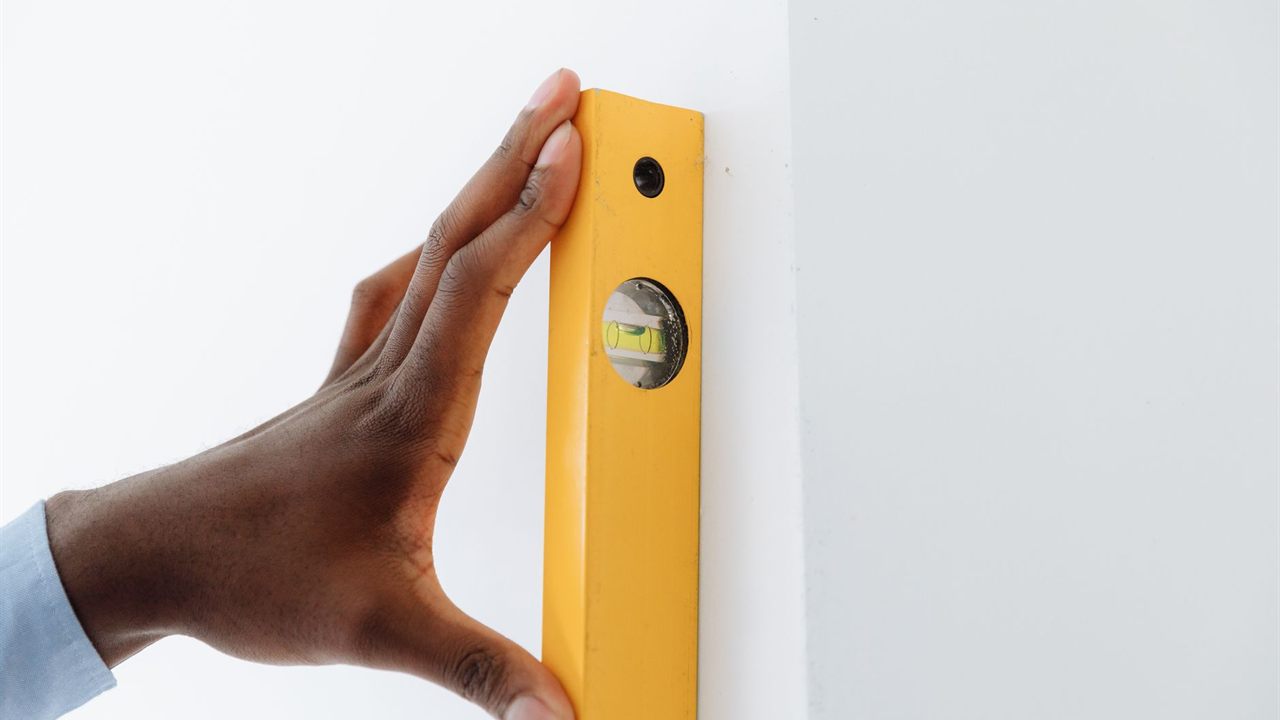
- Level the plate, pull hard on it, then hang the TV and fit the safety screws.

TV on a brick fireplace: heat and height
A TV on a brick fireplace is the most requested brick job and the one with the most variables. Heat rising off a firebox and up the chimney breast depends on the fireplace, the fuel, the mantel and how long the fire burns.
- Heat: check the TV maker’s operating temperature range in the manual. Then measure the wall where the screen will sit during a long fire, using a surface thermometer, before you commit.
- Mantel: a deep mantel shelf deflects some heat but pushes the screen higher.
- Height: there is no single correct figure. A high screen strains necks, so many installers aim the screen centre toward seated eye level and use a tilting mount when the fireplace forces it higher.
The SANVMPL50A-B1 tilting TV mount is one option for a high position; check its listing for size and weight range.
Cables on brick and where to find mounts
Brick leaves no cavity for in-wall cable kits, so plan a surface raceway, a chase in the chimney cladding, or a source cabinet directly below the screen. If the source sits across the room, read our guide to HDMI cable length limits, and protect the gear as covered in power conditioner vs surge protector.
The Bursma TV and display mounts category lists fixed, tilting, full motion and ceiling mounts, alongside speakers, cables and racks in the audio video division. For pricing and availability, ask your sales representative through the Bursma contact page, or apply for a Bursma dealer account.
Frequently asked questions
Is it better to drill into brick or mortar for a TV mount?
It depends on the wall. The Brick Industry Association notes that anchors in solid masonry usually go in mortar joints, while many installers prefer the brick when mortar is soft or old. Follow the anchor listing’s base material and edge distance.
Do I need a hammer drill for brick?
A hammer drill with a carbide masonry bit is the normal tool. A standard drill may get through soft brick slowly, but it struggles with hard brick and often leaves oversized holes.
Can a TV go above a brick fireplace?
Often, if the wall stays within the TV maker’s operating temperature during use and the height suits the seating. Measure the heat during a long fire before you commit to the position.
How many anchors does a TV mount on brick need?
Use every fastener position the mount’s instructions call for, with anchors rated for the material. Spread them over two or more courses so no single brick or joint carries the load.