
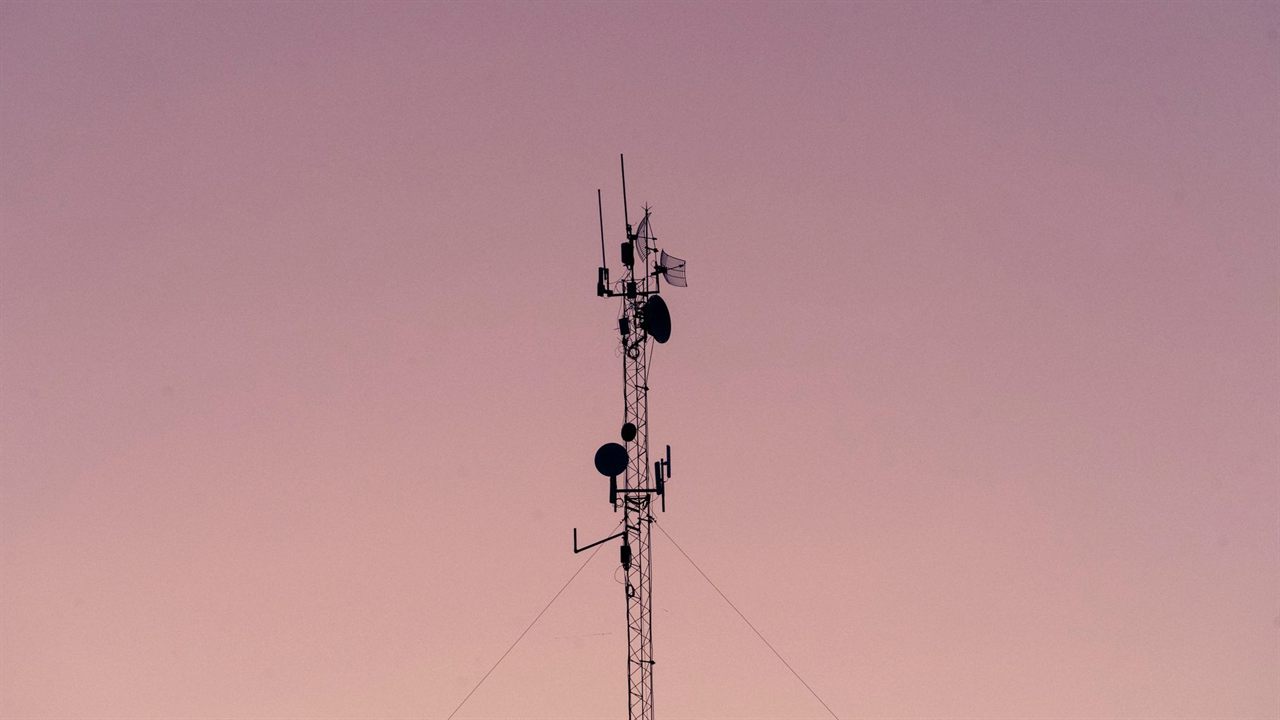
Two antennas can be perfectly aimed at each other and still lose most of the signal if one is turned on its side. That is polarization, and it matters on a TV antenna, a WISP sector and a dual-polarized backhaul dish alike. This is antenna polarization explained for installers: the types, what a mismatch costs in decibels, and how dual polarized radios use it to carry two streams at once.
What is antenna polarization?
Antenna polarization is the orientation of the electric field an antenna radiates: vertical or horizontal for most linear antennas, slanted at 45 degrees, or rotating in circular polarization. Both ends of a link must match. Two linear antennas turned 45 degrees apart lose half the power, about 3 dB, and at 90 degrees they ideally receive nothing.
What polarization actually describes
A radio wave carries an electric field that swings back and forth as it travels. McMaster University’s antenna lecture notes on polarization define polarization as the path traced by the tip of that field vector at a fixed point. The trace takes one of three shapes:
- Linear: the field swings along a single line. Vertical, horizontal and slant 45 are all linear.
- Circular: the field keeps its strength and rotates once per cycle, either right-hand or left-hand.
- Elliptical: the general case, in between the two.
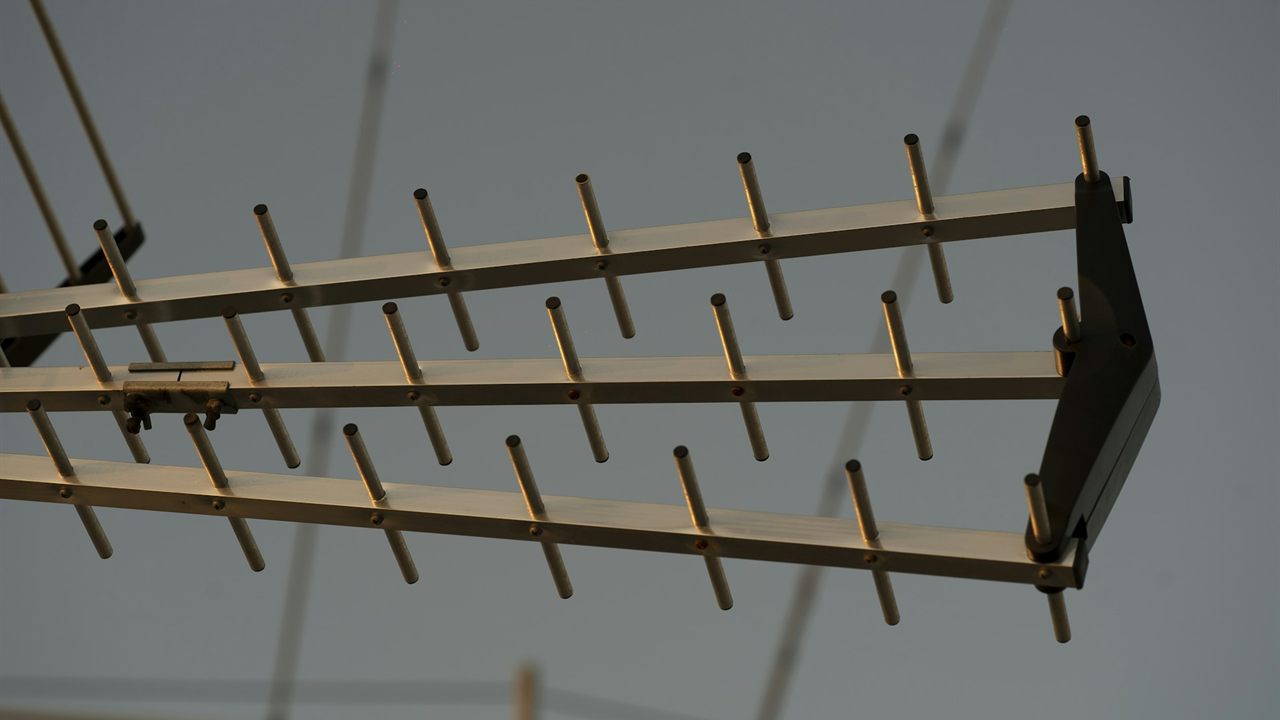
An antenna’s polarization is the polarization of the wave it radiates, and the same notes show it receives best from a wave of matching polarization. For a simple dipole or Yagi, the field lines up with the elements: elements horizontal, polarization horizontal.
Vertical vs horizontal polarization
Neither orientation is better in general. What matters is that the receive antenna matches the transmitter, and the transmitter is usually decided for you.
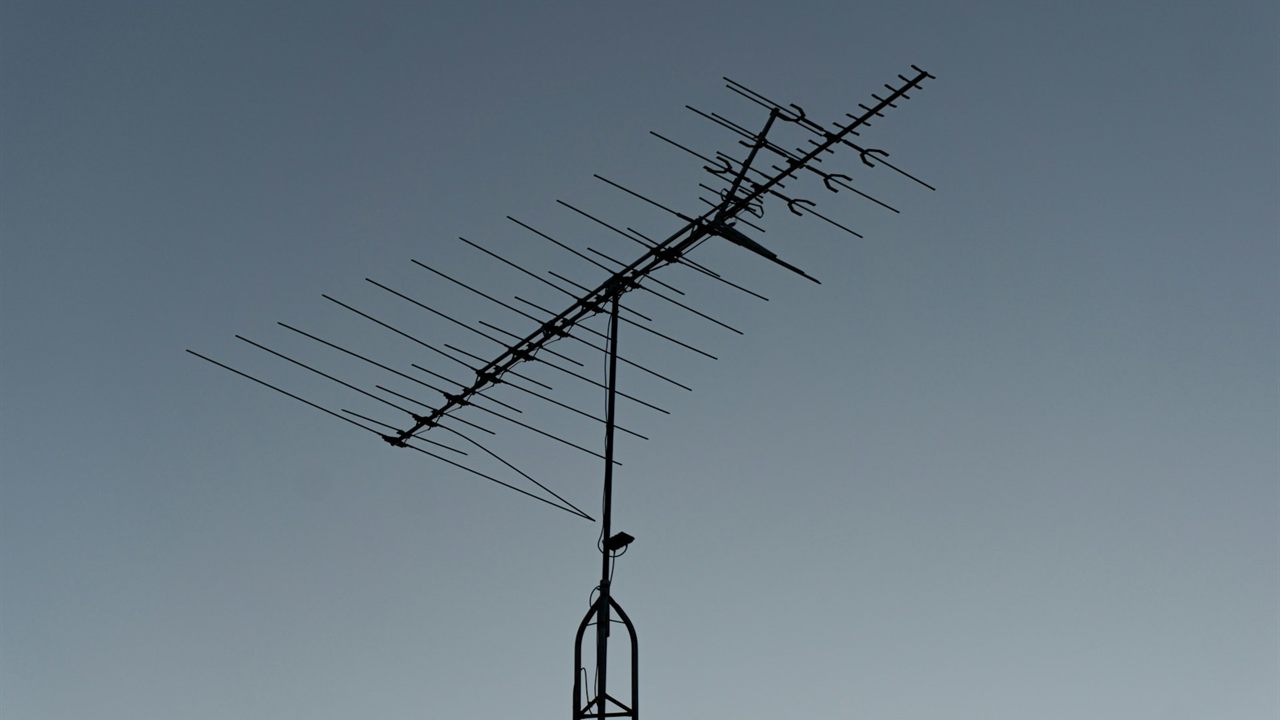
US television is the clearest case. The FCC’s TV antenna rule, 47 CFR 73.625, says “It shall be standard to employ horizontal polarization.” Stations may add circular or elliptical polarization, but the vertical component may not exceed the horizontal one. That is why outdoor TV antennas mount with their elements level; the outdoor antenna category lists that type, and band choice is in our guide to UHF vs VHF antennas.
In WISP gear, many current radios and antennas are dual-polarized and use both orientations at once. Check the spec sheet rather than guessing from the housing.

Slant 45 and circular polarization in brief
Slant polarization is linear polarization rotated 45 degrees. A pair of ports at plus and minus 45 degrees are just as orthogonal as horizontal and vertical, so a dual-slant antenna works the same way as an H and V one, provided the far end uses the same scheme.
Circular polarization rotates, so turning a circular antenna about its own axis does not change the match. Sense still matters: the McMaster notes show that a right-hand antenna receiving right-hand polarization has no loss, but a right-hand antenna cannot receive a left-hand wave at all.
A linear antenna receiving a circular wave sits in between. Working the same formula, the linear antenna picks up half the power, a 3 dB loss, at any rotation.
Polarization mismatch loss, worked out
The McMaster notes define a polarization loss factor: 1 (0 dB) when the polarizations match and 0 when they are orthogonal. For two linear antennas rotated by an angle, the factor is the cosine of the angle, squared. Their worked example puts 45 degrees at 0.5, or minus 3 dB.
| Angle between polarizations | Power received | Loss |
|---|---|---|
| 0 degrees | 100% | 0 dB |
| 10 degrees | 97% | 0.13 dB |
| 20 degrees | 88% | 0.54 dB |
| 30 degrees | 75% | 1.25 dB |
| 45 degrees | 50% | 3.0 dB |
| 60 degrees | 25% | 6.0 dB |
| 90 degrees | 0% in theory | Total, limited in practice by the antennas |
Two lessons follow. A few degrees of tilt barely matters for signal strength. A quarter turn, such as a TV antenna mounted with its elements vertical, throws away most of the signal. Real antennas never reach a perfect zero, so a crossed antenna still hears something, just far less.

Dual polarized antennas and MIMO radios
A dual polarized antenna has two feeds at right angles in one housing: horizontal and vertical, or plus and minus 45. Because the two polarizations are orthogonal, a 2×2 MIMO radio can send a separate data stream on each one over the same channel. That is how WISP sectors, subscriber dishes and point to point links carry two streams without extra spectrum.
It only works when both ends agree. Practical rules:
- Map the chains. Chain 0 and chain 1 must land on the same polarization at both ends, and the cable or port labels must match.
- Mount level. A rotated bracket rotates both polarizations at once.
- Read per-chain signal. Many radios show signal for each chain; a large gap between them points to a mounting or cabling problem, not the path.
Choosing sector or omni coverage for the access point is a separate decision, covered in sector vs omni antennas.
Cross-polarization isolation
Cross-polarization isolation, or cross-pol discrimination, is how well an antenna keeps the two polarizations apart: the signal on one port compared with what leaks in from the other. Spec sheets quote it in dB, and a higher number means less leakage between the two MIMO streams.
Alignment eats into it. Using the same formula, an ideal antenna rotated by an angle leaks the sine of that angle, squared, into the opposite port:
- 2 degrees off: about 29 dB below the wanted signal.
- 5 degrees off: about 21 dB below.
- 10 degrees off: about 15 dB below.
So a small tilt that costs almost nothing in signal strength can cost a dual-pol link real isolation. Licensed microwave coordination notices list the polarization of each path, a point covered in licensed vs unlicensed backhaul.
Getting polarization right on the install
Set polarization before you fine-tune the aim, then confirm it with the radio’s readings. For the link budget, Fresnel clearance and alignment steps, follow our guide on how to plan a point to point wireless link.
The wireless antenna category lists sector, dish and omni antennas for WISP and point to point work, alongside wireless radios in the broadband and WiFi division. For pricing and availability, ask your sales representative through the Bursma contact page, or apply for a Bursma dealer account.
Frequently asked questions
Is vertical or horizontal polarization better?
Neither is better in general. Match the transmitter: US TV stations use horizontal polarization as the FCC standard, and WISP links use whatever both ends are set up for.
What happens if antenna polarization does not match?
You lose signal. Two linear antennas 45 degrees apart lose about 3 dB, and at 90 degrees they ideally receive nothing; real antennas leak a little, so some signal still gets through.
What is a dual polarized antenna?
An antenna with two feeds at right angles, horizontal and vertical or plus and minus 45 degrees. A MIMO radio sends a separate stream on each, so both ends must use the same mapping.
Does circular polarization fix alignment problems?
It removes rotation from the equation, but the sense must match. A right-hand antenna cannot receive a left-hand wave, and a linear antenna receiving a circular wave loses about 3 dB.