
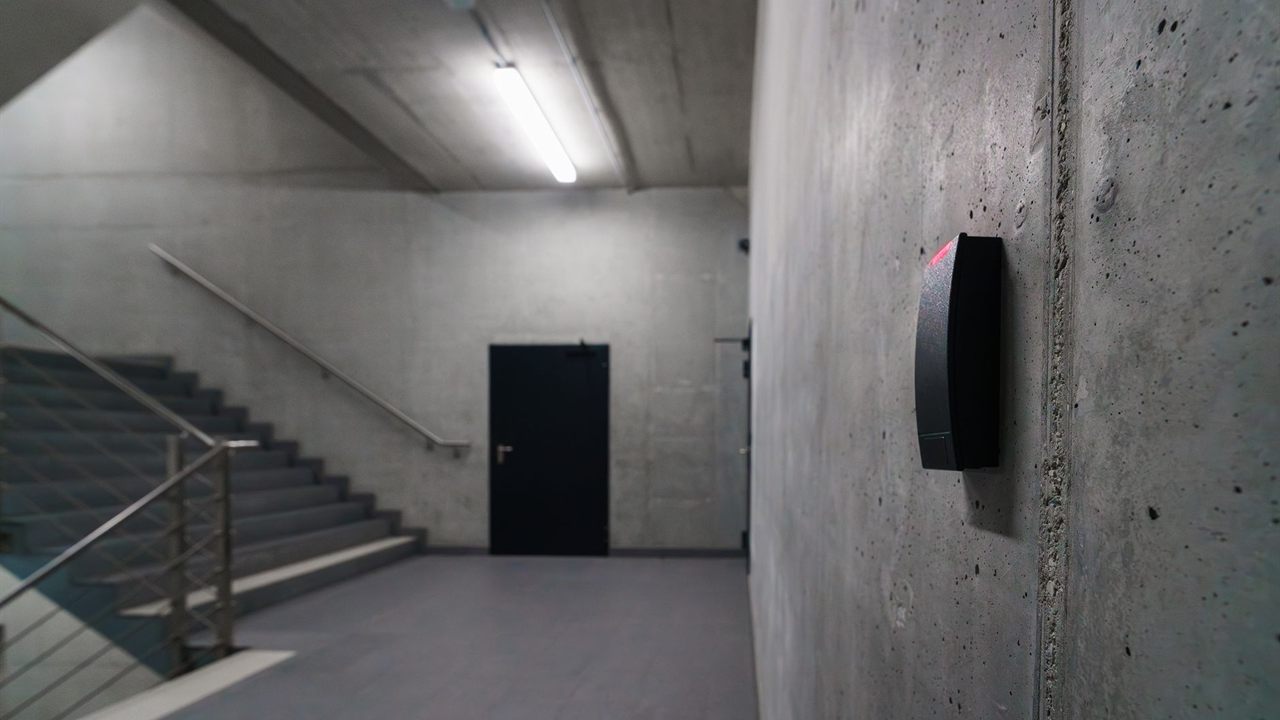
Every card reader or keypad door needs something that actually locks it, and on most commercial jobs the choice comes down to maglock vs electric strike. Both release the door when the access control panel says so, but they behave very differently when the power drops, when someone needs to get out in a hurry and when the inspector walks the job.
What is the difference between a maglock and an electric strike?
A maglock holds the door shut with an electromagnet on the frame and an armature plate on the door, so it releases whenever power is cut. An electric strike replaces the frame’s strike plate and lets the door’s own latch pass when the access system releases it, and it can usually be set fail safe or fail secure.

Maglock vs electric strike at a glance
The table compares the two devices on a typical access controlled door. Holding force, voltage and current draw vary by model, so the data sheet has the final numbers.
| Factor | Maglock | Electric strike |
|---|---|---|
| How it locks | Electromagnet on the frame holds a steel armature on the door | Releasable keeper in the frame holds the door’s own latch or bolt |
| On power loss | Always unlocks (fail safe) | Fail safe or fail secure, often field selectable |
| Free egress | Needs a release device: sensor, push button or hardware switch | Usually built in: the inside lever or panic bar retracts the latch |
| Frame work | Surface mounted, little cutting | Frame must be cut or prepped for the strike body |
| Typical fit | Interior doors, glass doors, doors with no latch | Perimeter doors, offices, doors with existing locksets |
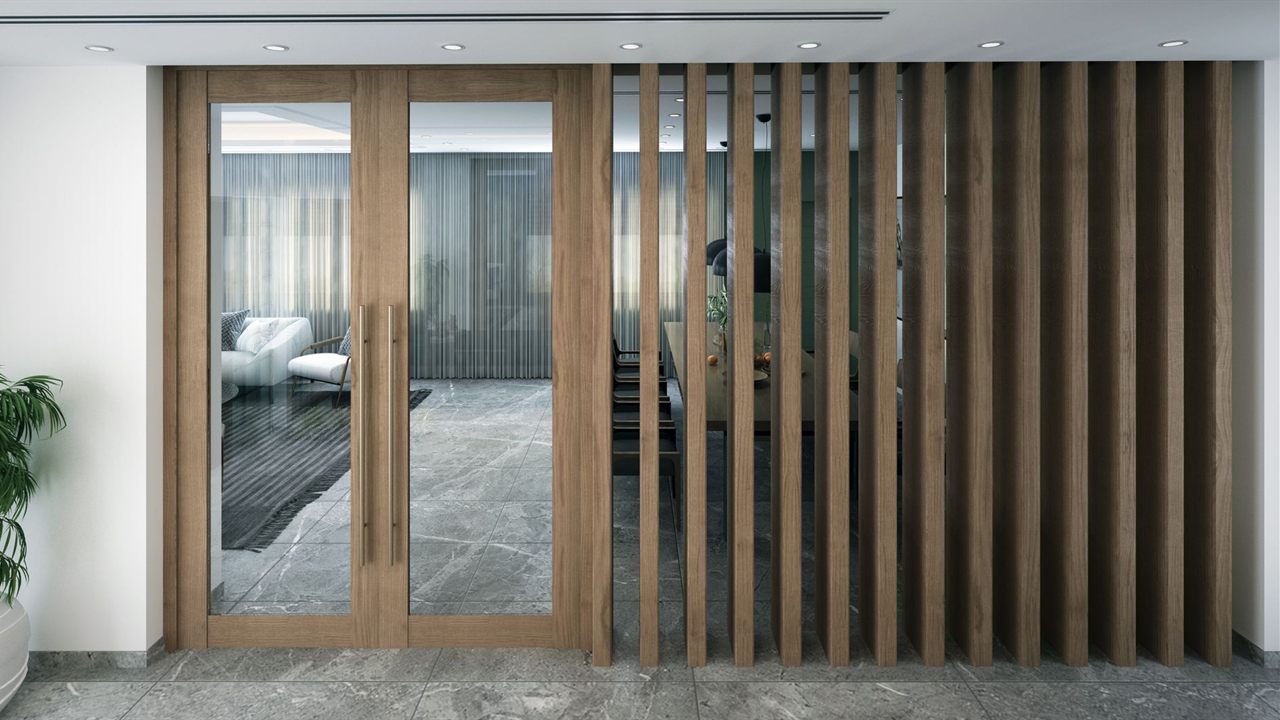
How a maglock works
An electromagnetic lock is a coil mounted on the header of the frame and a flat steel armature plate fixed to the door. With power applied, the magnet clamps the plate and the door cannot be pulled open. Common models are sold in holding force classes such as 600 lb and 1,200 lb, and most run on 12 or 24 VDC.
With no moving parts, maglocks suit glass doors, double doors and doors with a worn latch. The weakness is the same feature: the magnet only holds while it is energized. A maglock is fail safe by design, and the only way to keep it locked through an outage is a battery backed power supply.

How an electric strike works
An electric strike replaces the fixed strike plate in the jamb. Its keeper is held by a solenoid, and when the access control panel signals, the keeper is free to swing and the door’s own latch passes through. The door still locks the ordinary way when it closes, and the mechanical key override in the lockset still works.
Because the lockset stays in charge of the inside, a person leaving simply turns the lever or pushes the panic bar. That is the big practical advantage: free egress usually comes from hardware that is already on the door, not from added electronics. The trade-off is labour. The frame has to be cut or prepped to take the strike body, and the strike must match the latch type, the frame material and the lockset’s backset.

Fail safe vs fail secure: what happens when power drops
The fail safe vs fail secure choice describes the state of the door when the lock loses power. A fail safe device unlocks; a fail secure device stays locked from the outside. Neither term changes the inside of the door: with a fail secure strike, people inside can still leave through the lever or panic bar.
- Exterior and perimeter doors: usually a fail secure strike, so an outage does not leave the building open.
- Interior doors on an exit path: often fail safe, especially where the lock secures both sides.
- Fire rated doors: the door must stay latched in a fire, so hardware must be listed for fire doors and is generally set fail secure.
- Maglocks: fail safe only, wherever they go.

Egress and life safety rules for maglocks
Because a maglock locks both sides of the door, the model codes (the International Building Code and NFPA 101, as adopted locally) treat it as a special locking arrangement. The Fairfax County Fire Marshal’s summary of special locking requirements describes two accepted methods, each needing a special locking permit there.
- Door hardware release: the panic bar or lever on the door breaks power to the lock when operated, with one hand and no grasping or twisting.
- Sensor release: a sensor on the egress side unlocks the door on approach, and loss of power to the sensor or the lock unlocks it. A “Push to exit” button 40 to 48 inches above the floor, within 5 feet of the door, must cut power independently of the control electronics and keep the door unlocked for at least 30 seconds.
The same document says fire alarm or sprinkler activation, where those systems exist, must unlock a sensor release door until reset, and that the locking system must be listed to UL 294. Code editions and local amendments differ, so treat this as a summary, not legal advice: the authority having jurisdiction (AHJ) has the final word on every locked egress door.
Installation and wiring notes
- Power supply: size a dedicated access control supply for the lock’s current draw, plus battery backup where the door must stay locked through a short outage.
- Fire alarm interface: where required, wire the release so the fire alarm relay drops lock power directly.
- Suppression: fit the diode or varistor the lock maker supplies across the coil to protect the panel’s relay.
- Inputs: add a door position switch and a request to exit input so the panel does not report a forced door every time someone leaves.
- Alignment: a maglock armature must meet the magnet squarely; a strike keeper must line up with the latch with the door closed and the weatherstrip compressed.
Run lock power on cable heavy enough for the length and current, and keep reader, contact and lock conductors labelled. Our guide to 22/2 vs 22/4 alarm wire covers conductor counts, and CMR vs CMP cable ratings covers riser and plenum spaces.
Choosing door access control hardware for the job
Start with the door, not the lock. Ask four questions:
- Does the door already have a working latch and lever or panic bar? If so, a strike usually keeps egress simple.
- Is the frame aluminum storefront, hollow metal or wood, and can it be cut?
- Must the door stay locked when the power fails?
- Is it a fire rated opening or on a required exit path?
Access control rarely stands alone. Door contacts and keypads tie into the alarm side, covered in our comparison of wireless vs hardwired alarm sensors, and residential smart locks often join the panel over the radios explained in Z-Wave vs Zigbee for home automation.
Where to buy access control products
Browse the Bursma access control category and the wider security, surveillance and control division, including security hardware and accessories and intrusion alarm panels. For pricing and locking hardware options, contact your sales representative.
If you install for a living, open a Bursma dealer account, or contact the Wyoming, MI branch near Grand Rapids.
Frequently asked questions
Is a maglock fail safe or fail secure?
A maglock is always fail safe. The magnet holds only while it has power, so it releases when power is cut. Battery backup can keep it locked through a short outage, but it does not change how the device fails.
Can a maglock be used on an exterior door?
It can, but it unlocks whenever power fails and it needs an approved egress release on the inside. Many installers prefer a fail secure electric strike on perimeter doors for that reason.
Does a door with an electric strike need a request to exit device?
Not for egress, since the inside lever or panic bar opens the door mechanically. A request to exit input is still useful so the access control panel does not log a forced door alarm.
Can an electric strike go on a fire rated door?
Only a strike listed for fire doors, set so the door stays latched during a fire. Confirm the listing against the door’s rating and check with the AHJ.