

White grilles disappear into a white ceiling, but not into a dark accent wall, a coloured kitchen ceiling or a stained wood soffit. Most in-ceiling and in-wall grilles are made to be painted, and knowing how to paint speaker grilles properly keeps the finish smooth and the sound unchanged. The work is simple; the mistakes are filled perforations, a scrim that will not go back, and paint on parts that should never see it.
How do you paint speaker grilles?
Remove the grille from the speaker, take off the scrim cloth if the maker says to, and clean the metal. Prime with a metal primer, then spray thin, light coats from several angles. Blow paint out of the perforations while it is wet, let it dry fully, refit the scrim and press the grille back on. Never paint the drivers.

Check the instructions, then remove the grilles
Painting instructions vary by model, and on some points makers disagree outright. Before buying paint, find the instructions for the exact speaker and note four things: whether the scrim comes off, whether a spare scrim is available, which primer and paint they suggest, and whether the frame may be painted at all.
One maker states that certain grilles must not be painted because spare scrims are not available. Another tells installers to buy replacement scrims before starting. If the job has many speakers, paint every grille from the same batch of paint so the colour matches across the room.
Most grilles are held by magnets or by friction in the frame. A common method is a small hook or bent wire through a perforation near the edge, pulling gently and evenly. Start at one point and work around; heavy force on one edge can bend a thin perforated sheet, and a bent grille never sits flat again.
Lay each grille face up on a clean surface and mark the back with masking tape showing which speaker it came from. On a job with a dozen ceiling speakers, the grilles are rarely interchangeable once trimmed and painted.

Speaker grille scrim: remove it or leave it?
The scrim is the thin acoustic cloth on the back of many grilles. It hides the driver and baffle from view while letting sound through. Makers take different positions on it, so follow the one for your speaker:
| Maker position | What to do | Watch for |
|---|---|---|
| Remove and refit the same scrim | Peel it off, paint, refit with a light mist of spray adhesive | Do not stretch or crease it while removing |
| Remove, refit only if needed | Paint, then refit if the driver or labels show through | Check the look with the grille held over the speaker |
| Fit a new scrim | Order replacement scrims before painting | Some grilles have no spare: do not paint those |
Where the scrim is glued, one maker suggests a hair dryer or heat gun on low to soften the tacking glue before peeling. Clean the adhesive residue off the grille afterwards; leftover glue collects paint and blocks holes.
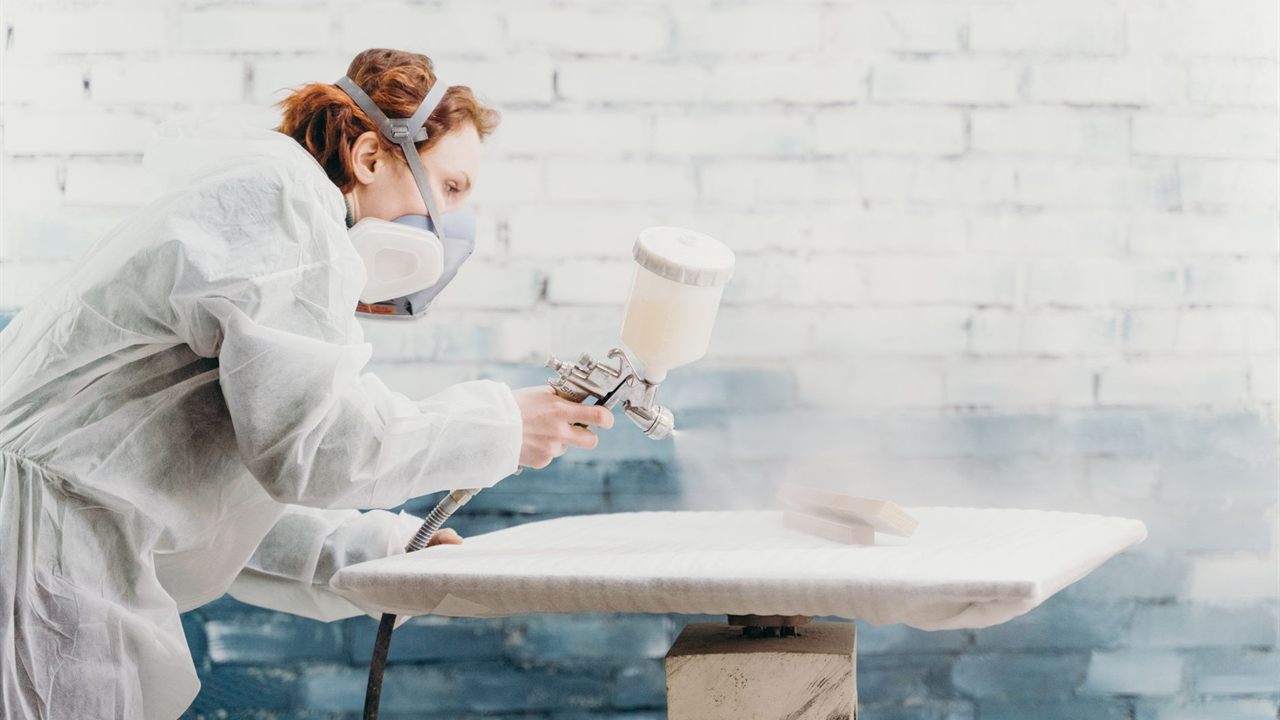
Primer and paint for metal grilles
Many in-ceiling and in-wall grilles are powder-coated steel or aluminum, and paint will not grip a smooth coated finish on its own. Clean off dust and finger grease, then use a metal primer or bonding primer and follow the can directions.
For the top coat, makers differ:
- Thinned latex through a spray gun: two makers suggest water-based latex thinned 1:1 and strained, sprayed through a small touch-up gun.
- Oil-based paint for grilles that face moisture or are installed outdoors, per the same makers.
- Spray paint with primer included: one maker prefers a single even coat of a paint-and-primer spray, because multiple coats can clog the holes.
For a theater or media room, a flat or matte sheen avoids reflecting the screen. Paint indoors only with good ventilation: the U.S. EPA’s guide to volatile organic compounds and indoor air quality lists paints among the sources, notes that indoor levels of many VOCs run up to ten times higher than outdoors, and advises more ventilation and following the label precautions.

How to paint speaker grilles: thin coats and clear holes
- Prop the grille off the work surface on small blocks or hang it, so paint does not pool where it touches.
- Spray light passes across the face from one direction. One maker’s settings: three quick strokes from about 10 inches away.
- Let it set for a minute, turn the grille 90 degrees and repeat, until all four directions are covered and the paint reaches the sides of the perforations.
- While the paint is still wet, hold the grille up to the light. Blow any filled holes clear with compressed air from the back.
- Stop as soon as the colour covers. Extra paint narrows every hole, and on tight-fitting grilles it can stop the grille going back on.
A foam roller with almost all the paint rolled off is a fallback for flat grilles, but a sprayer leaves less in the holes. If any perforations are blocked after drying, clear them gently with a straight pin or sewing needle.

Can you paint ceiling speakers in place?
The grille, no; take it down every time. The frame is where views split. One commercial maker says never paint a speaker while it is installed and never paint the area under the grille, which holds acoustic and mounting parts. Another expects the decorator to paint the ceiling after install and says the flange and baffle must be masked first.
If you paint a visible frame or flange, follow these rules:
- Never paint the drivers, cone, surround, tweeter or ports. Cover them with the maker’s paint mask if one came in the box.
- Mask labels, terminals and screw threads.
- Use one thin coat, the same paint as the ceiling, and keep the grille off until it dries.
If the ceiling is not yet painted, the simplest route is to fit the paint mask, let the painter finish, then paint the grilles separately. Our in-ceiling speaker placement guide covers the cutting and layout that comes before this stage, and whether in-ceiling speakers need back boxes covers the enclosure behind the baffle.

Drying, reassembly and outdoor grilles
Let the grilles dry fully before handling. One maker gives at least three hours and preferably overnight; the paint can label has the last word on recoat and cure times. Then:
- Refit the scrim with a single light mist of spray adhesive on the cloth, or a new scrim if the maker supplies one.
- Check again for blocked holes against the light.
- Match each grille to its speaker using your tape marks, and press it on evenly so it seats flat.
- Play music at low volume and listen for a rattle that would point to a loose scrim or a grille not seated.
Outdoor and patio speakers face sun and moisture, so use the durable paint the maker suggests for outdoor use and expect to touch up more often. Our outdoor speaker placement guide covers where those speakers should go. For the cable behind a whole-home system, see our whole house audio wiring guide.
Where to find in-ceiling and in-wall speakers
The speakers category lists in-ceiling, in-wall and outdoor speakers, part of the Audio, Video and Lamps division. For pricing and availability, ask your sales representative through the Bursma contact page or at the Columbus, Ohio branch, or open a Bursma dealer account.
Frequently asked questions
Does painting speaker grilles affect sound?
Not if the coat is thin and the perforations stay open. Filled holes and paint on the scrim cloth are what change the sound, which is why makers stress light coats and removing the scrim.
Can I use a brush on speaker grilles?
A brush pushes paint into the holes, so spraying is preferred. A brush suits a solid frame or flange, never the perforated grille itself.
What if I painted over the scrim already?
Check whether the maker sells a replacement scrim or grille. One maker states that leaving the scrim on during painting harms both the appearance and the acoustic performance, so a fresh scrim is the safer fix.
Do I need a primer on speaker grilles?
Yes, for metal grilles, unless you use a spray that includes primer. A metal or bonding primer helps the top coat grip a smooth powder-coated finish.