

Every intrusion quote forces the same call: run wire to each opening, or hang transmitters and let the panel listen? The answer to wireless vs hardwired alarm sensors depends less on which technology is better and more on the building, the stage of construction and who will service the system later. This guide compares the two on labor, power, supervision and maintenance, explains 345 MHz sensors, and shows when a hybrid or takeover design beats both.
Should you install wireless or hardwired alarm sensors?
Hardwired alarm sensors connect to the panel over cable, draw no batteries and suit new construction or open walls. Wireless sensors, such as 345 MHz door contacts and motion detectors, run on lithium batteries, install in minutes in finished homes and report to the panel by radio. Both are reliable when supervised; many dealers mix them on one panel.
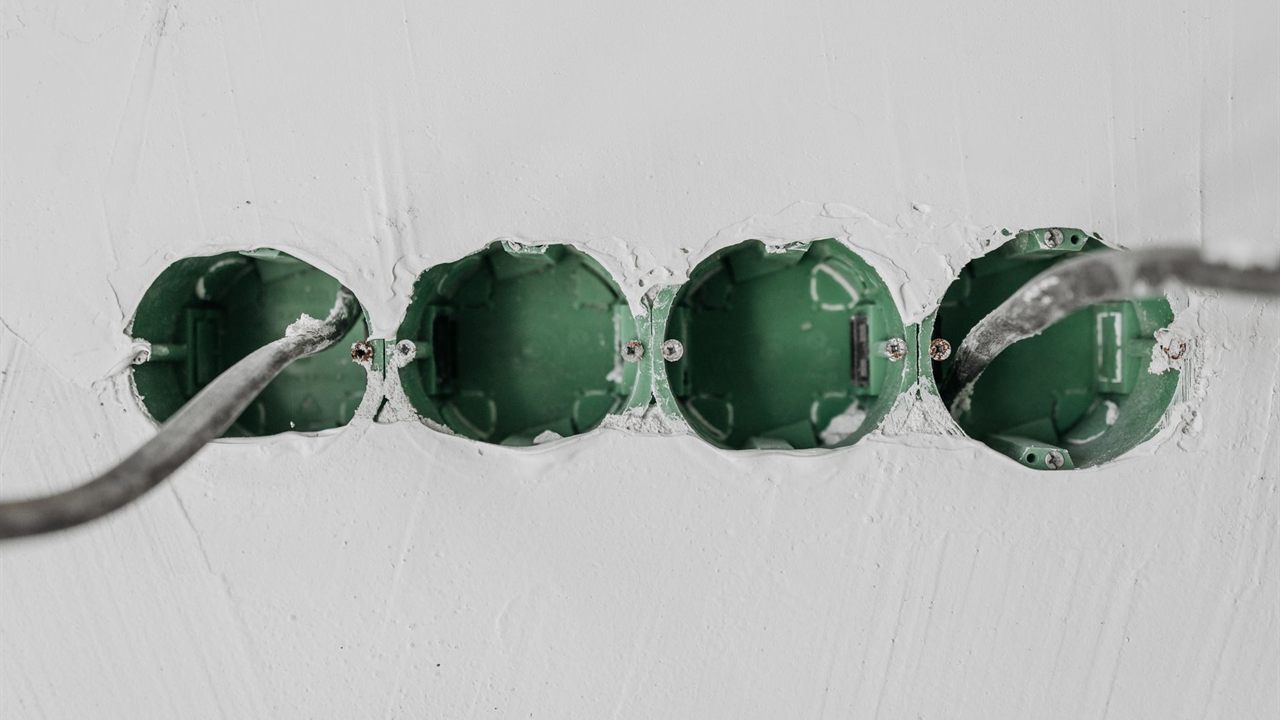
Wireless vs hardwired alarm sensors at a glance
The table sums up the trade-offs dealers weigh on a typical residential job. Neither column wins every row, which is why most installs end up as a blend.
| Factor | Hardwired | Wireless |
|---|---|---|
| Install labor | High in finished walls, low during pre-wire | Low: mount, enroll, test |
| Sensor power | From the panel and its backup battery | Battery in each sensor |
| Ongoing service | Mostly the panel backup battery | Sensor battery changes over the system’s life |
| Main attack or failure | Cut or shorted loop, damaged cable | RF interference, jamming, dead battery |
| Best fit | New construction, remodels with open walls | Finished homes, rentals, hard-to-reach openings |
How hardwired sensors work
A hardwired door contact is a reed switch and magnet on a two-conductor loop back to a zone input. With an end-of-line resistor at the device, the panel can tell a normal loop from an open circuit or a short, so a cut cable reports as a trouble or alarm. Powered devices such as motion detectors and glass break sensors take a second pair for auxiliary power, which is why four-conductor cable is common.
The cost is labor. Pre-wiring during framing is quick, but fishing cable to every window in a finished, insulated house means opening walls or spending a day in the attic. For the cable side of that decision, see our comparison of 22/2 vs 22/4 alarm wire and the security wire and alarm cable category.

How 345 MHz alarm sensors work
A wireless sensor is the same switch or detector paired with a small radio transmitter. Each sensor must match the receiver frequency of the panel, and on 2GIG systems that frequency is 345 MHz: the panels, door and window contacts, motion detectors, smoke and CO detectors and key ring remotes in our 2GIG 345 MHz wireless sensors category all share it. The eSeries versions are the newer generation; check each sensor’s listing for its features before you quote it.
Installation is mount, enroll, test. There is no wire to pull, no drywall to patch and no conductor count to plan, which is why wireless dominates retrofit work in occupied homes.

Reliability: supervision, jamming and cut wires
Old objections to wireless assumed sensors that transmitted only on alarm. Supervised sensors check in with the panel at a set interval, so a dead, removed or out-of-range sensor shows up as a trouble condition instead of failing silently. Several sensors in our catalog, including the 2GIG recessed contact and glass break detector, are listed as fully supervised.
Jamming is the wireless equivalent of a cut wire. Enable RF jam detection where the panel supports it, place the panel centrally, and keep sensors away from large metal surfaces that shorten range. A hardwired loop with end-of-line supervision resists jamming entirely, but a cable cut outside the protected area still needs to be caught by tamper and loop supervision.

Batteries and maintenance
Battery life is the real ongoing cost of wireless. Bursma’s listings for the 2GIG recessed door contact, glass break detector and passive infrared motion detector each quote a lithium battery with 5 years life, so a system of 20 sensors produces battery calls every year once it ages. Build that into the service plan and the monitoring contract.
Some maintenance applies to both types. The Loudoun County Sheriff’s Office false alarm guidance tells owners to replace batteries as the manufacturer specifies, keep door and window frames in good condition because loose joints cause false alarms, and have the system checked once a year by a qualified technician. A contact on a sagging door false-alarms whether it is wired or not.
Hybrid systems and hardwire takeover
Most panels with a wireless receiver accept wired zones as well, and both count toward the panel’s zone capacity. A hybrid layout uses wire where it already exists or is cheap to pull, and wireless everywhere else.
Takeover is the other common case: a customer has an old wired system and wants a modern panel. A hardwire conversion kit, such as the 2GIG-TAKE-KIT1 in our catalog, lets the existing wired contacts report to a wireless panel instead of being replaced one by one. Check the manufacturer documentation before moving smoke, heat or CO devices onto a takeover module, because life-safety circuits often have separate rules.
Which to quote: new construction, retrofit or takeover
Use the job stage to make the call:
- New construction or gut remodel: pre-wire every opening and detector location. The cable costs little while the walls are open, and the homeowner avoids battery calls.
- Finished, occupied home: go wireless on 345 MHz supervised sensors. Wire only where a run is easy, such as an unfinished basement.
- Existing wired system: keep the working contacts through a takeover kit, then add wireless sensors for new openings.
- Commercial or high-security space: lean toward hardwired loops with end-of-line supervision, and add wireless only for doors that cannot be reached.
Where to buy alarm sensors and wire
Sirens, strobes and alarm accessories sit in Intrusion Alarms, with panels and sensors under the Security - Surveillance - Control division. If the system also controls locks and thermostats, our Z-Wave vs Zigbee guide covers the automation radios that sit alongside the alarm sensors.
Bursma Distributing has sold wholesale to dealers, installers and integrators since 1947. Dealers see their own pricing and stock in Shop Online after logging in, and new installers can apply for a Bursma dealer account. Dealers in central Ohio can reach the Columbus, Ohio low-voltage branch at 614-299-9040.
Frequently asked questions
Are hardwired alarm systems more reliable than wireless?
A hardwired loop has no batteries and no radio path, so it has fewer ways to fail. Modern supervised wireless sensors close most of that gap, because the panel reports a missing or low-battery sensor instead of failing silently.
Can wireless alarm sensors be jammed?
Any radio link can be jammed. Panels with RF jam detection report a sustained blocking signal as a trouble or alarm, which is why that feature should be enabled on every wireless install.
How long do wireless alarm sensor batteries last?
It depends on the sensor and how often it transmits. Several 2GIG sensors in our catalog are listed with a lithium battery rated for 5 years life, so plan replacements as part of the service schedule.
Can you mix wired and wireless sensors on one panel?
Yes. Most panels with a wireless receiver also take wired zones, and a takeover kit can bring existing wired contacts onto a wireless panel. Both types count toward the panel’s zone limit.