

Every motorized shade job starts with one question: how does the motor get its power? The wired vs battery motorized shades decision shapes the whole project, from what happens at rough-in to who climbs the ladder five years later. Battery motors make a retrofit simple; hardwired motors take planning but need no upkeep.
Wired vs battery motorized shades: which should I install?
Choose hardwired motorized shades on new construction and remodels where walls are open, on large or heavy shades, and on windows that are hard to reach. Choose battery shades for retrofits in finished rooms. If the walls are open, prewire every window anyway, even if battery motors go in today.

Wired vs battery motorized shades at a glance
The table compares the three common ways to power a shade motor. It describes typical designs; the motor maker’s documentation sets what a given motor needs.
| Factor | Battery | Low-voltage wired | Line-voltage wired |
|---|---|---|---|
| Power source | Battery pack in or behind the shade, sometimes with a solar charger | Central or local power supply | Household circuit at the window |
| Best stage to install | Any time, including finished rooms | Rough-in, before drywall | Rough-in, before drywall |
| Who runs the wire | No wire | Usually the low-voltage installer, subject to local code | A licensed electrician |
| Upkeep | Recharge or replace batteries | None for power | None for power |
| Power outage | Keeps working while charged | Stops unless the supply is backed up | Stops unless the circuit is backed up |

How battery motorized shades work
A battery shade carries its own power, usually a pack inside the roller tube, in the headrail or in a wand behind the fabric. It may use replaceable cells, a rechargeable pack charged through a port, or a small solar panel on the headrail that tops up the pack.
Because nothing connects to the wall, a battery shade can go into a finished room without opening a wall. That makes it the default for retrofits, rentals and condos, where opening a wall or a window header is not an option.
Battery motors also keep running through a power failure while the pack holds a charge.

Hardwired motorized shades: line voltage or low voltage
Hardwired motorized shades come in two families, and they are wired by different trades.
Line-voltage motors
These take household AC directly at the window. The wiring is electrical work, so a licensed electrician runs the circuit and installs the box. Line-voltage motors are common on large, heavy shades and motorized drapery; the maker’s sizing chart says which motor a shade needs.
Low-voltage motors
These run on DC from a power supply, either one supply per shade or a central power panel that feeds many shades. Low-voltage wiring is usually within a low-voltage installer’s scope, but local code decides that, and the power supply plugs into or is wired to a household circuit. Check the rules where the job is before you quote the wiring.
Low-voltage runs have one catch: voltage drop. A long run on thin wire can leave the motor short of voltage, so it runs slowly or stalls. The motor maker’s wiring guide sets the wire gauge for each run length; follow it rather than guessing.
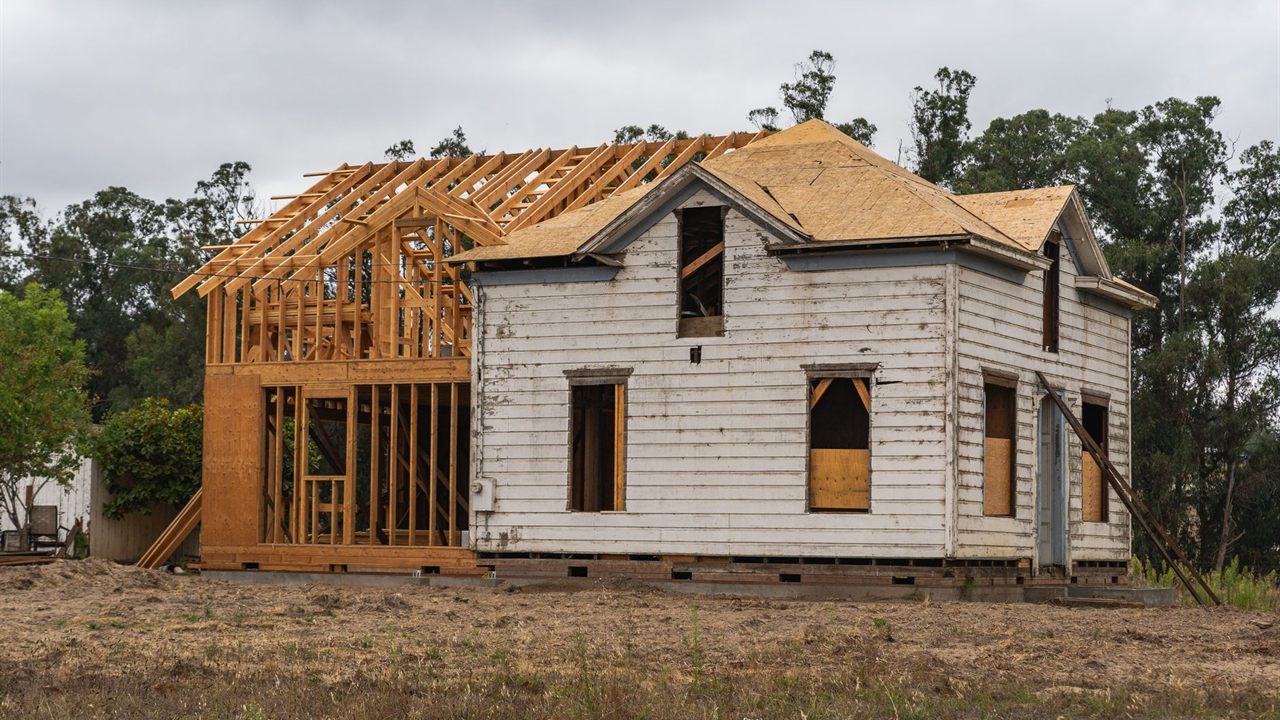
Prewire for motorized shades: what to run at rough-in
A prewire for motorized shades costs little when the studs are open and a lot once drywall is up. Settle the shade plan with the designer and builder before framing is finished, then pull wire before insulation goes in.
- Decide where the wire comes out. For an inside mount, bring it out at the head of the window opening on the motor side. For an outside mount or a ceiling pocket, bring it out where the bracket and headrail will hide it.
- Choose home run or daisy chain. A home run from each window to a central panel uses more cable but makes each shade easy to isolate and service. A daisy chain links shades in series to save cable, but a fault can take down every shade downstream.
- Run control wiring if the system uses it. Some wired motors take a data cable for control as well as power. Others are controlled by radio and need power only. Confirm the motor family first.
- Leave slack and label both ends. Coil enough cable at the window to reach the motor end of the shade, and label each run by room and window at the panel.
- Prewire every likely window, including ones the client says will never be automated. One forum installer ran power to every opening while fitting battery motors, so a later switch to wired power would need no new wall work.
For choosing the cable itself, the logic in our guide to 22/2 vs 22/4 alarm wire applies: count the conductors the device needs and leave spares.
Battery life and service access
Battery life is the most common question about battery shades, and there is no single answer. It varies by motor and use: shade size and weight, fabric, how often it runs, temperature and radio settings all affect it. Check the maker’s data for the specific motor, and treat any figure as an estimate.
Think about access before you choose battery power. A shade on a two-story window, a skylight or a deep window well means a ladder, a pole or a lift every time the pack needs charging. On those windows, hardwiring removes the service call altogether.
Solar panels help on sunny windows, but a north-facing or shaded window may not keep the pack topped up.

Safety, controls and keypads
Both wired and battery motors remove the lift cord from the room. The U.S. Consumer Product Safety Commission says cordless window coverings, or those with inaccessible cords, are the only safe option in homes with young children.
Control is a separate choice from power. Most shades can take a handheld remote, a wall keypad, scheduled scenes from an automation hub, or voice and app control through that hub. Wall keypads with raise and lower buttons give the household a fixed control by the window.
If the shades talk to the hub by radio, the protocol matters as much as the motor. Our Z-Wave vs Zigbee comparison covers range, mesh and hub support for the common smart home radios.
Choosing by project type
The same wired versus wireless trade-off shows up in alarm work, and our guide to wireless vs hardwired alarm sensors reaches a similar answer: wire where the walls are open, go wireless where they are not.
- New construction: prewire every window and use wired motors, low-voltage or line-voltage to suit the shade size.
- Remodel with open walls: prewire the rooms being opened; use battery motors elsewhere.
- Finished home retrofit: battery motors, with solar charging on sunny windows.
- Tall, skylight or hard-to-reach windows: wired wherever a cable can reach them.
Where to buy shades and shade keypads
The Bursma motorized shades category lists an LUTRD-PB-WH insulating honeycomb shade and wall keypads with raise and lower buttons, including the LUTRRD-W3BRL-WH 3-button group keypad and the LUTRR-T10RL-SW 10-button keypad. Hubs, lighting controls and wire are in the Bursma security and home automation division.
For pricing and availability, ask your Bursma sales representative. If you install for a living, apply for a Bursma dealer account, or call the Wyoming, MI branch or the Columbus, OH branch.
Frequently asked questions
Are battery motorized shades worth it?
For retrofits, usually yes. They install without opening walls and keep working in a power outage. The trade-off is recharging or replacing batteries, which matters most on windows that are hard to reach.
How long do motorized shade batteries last?
It varies by motor and use, including shade size, how often it runs and temperature. Check the maker’s data for the specific motor rather than relying on a general figure.
Do hardwired shades need an electrician?
Line-voltage motors do. Low-voltage motors are usually wired by the low-voltage installer, with the power supply connected to a household circuit, but local code decides who may do which part.
Can battery shades be converted to hardwired?
Some motor families offer a wired power option for their battery motors, and some do not. If the window was prewired, check the maker’s documentation for a compatible power adapter or a wired motor.