

Speaker wire gauge is one of the first calls on a rough-in, and one of the hardest to change once the drywall is up. The right size depends on three numbers: how long the run is, what impedance the speaker presents, and how much loss you are willing to accept. This guide gives the resistance of each common gauge, shows how to work out a run yourself, and covers the in-wall rating, which is a separate decision from the gauge.
What speaker wire gauge should I use?
For an 8 ohm speaker, 16 AWG copper suits runs up to about 50 feet and 14 AWG up to about 80 feet, if you accept wire resistance of 5 percent of the speaker’s impedance. Halve those distances for 4 ohm speakers. Longer runs need 12 or 10 AWG, or a 70V system.

How speaker wire gauge works
Speaker wire is sized in American Wire Gauge (AWG). The scale runs backwards: the smaller the number, the thicker the conductor. Common sizes for speaker runs are 18, 16, 14 and 12 AWG, with 10 AWG for long or demanding runs.
Thicker copper has less resistance per foot. Any resistance in the wire sits in series with the speaker, so it takes a share of the amplifier’s output as heat and leaves less for the speaker. On a short run with a high impedance speaker that share is tiny; on a long run to a low impedance load it starts to show as lost level and looser bass.

Speaker wire gauge chart: resistance per gauge
The figures below are for solid copper at 20 C, from the Georgia State University HyperPhysics wire gauge table. The same source notes that copper resistivity varies by a few percent with purity and manufacture, and stranded wire of the same gauge is close to these values.
| Gauge | Diameter (inches) | Ohms per 1000 ft | Ohms per 100 ft of run (two conductors) |
|---|---|---|---|
| 18 AWG | 0.0403 | 6.385 | 1.28 |
| 16 AWG | 0.0508 | 4.016 | 0.80 |
| 14 AWG | 0.0641 | 2.525 | 0.51 |
| 12 AWG | 0.0808 | 1.588 | 0.32 |
| 10 AWG | 0.1019 | 0.9989 | 0.20 |
The last column matters most. A speaker circuit is a loop: current goes out on one conductor and back on the other, so a 100 foot run means 200 feet of copper.

How to work out the gauge for a run
Charts that list a maximum length per gauge are all built the same way. Someone picks a loss limit, then solves for the distance. Here is that calculation laid out so you can check it, or change the limit.
- Measure the one-way run from the amplifier to the speaker, along the actual cable path, not the straight line.
- Double it for the loop length.
- Multiply the loop length in feet by the ohms per 1000 ft, then divide by 1000. That is the wire resistance.
- Compare it with the speaker’s nominal impedance. The assumption used below is that the wire should be no more than 5 percent of it.
At 5 percent, the speaker gets about 0.4 dB less level and roughly 9 percent less power than with perfect wire. That limit is a common choice, not a standard, and it ignores the amplifier’s own output impedance and the way a speaker’s impedance rises and falls with frequency.
| Gauge | 8 ohm speaker (0.4 ohm limit) | 4 ohm speaker (0.2 ohm limit) |
|---|---|---|
| 18 AWG | 31 ft | 16 ft |
| 16 AWG | 50 ft | 25 ft |
| 14 AWG | 79 ft | 40 ft |
| 12 AWG | 126 ft | 63 ft |
| 10 AWG | 200 ft | 100 ft |
One worked run: 60 feet of 16 AWG to an 8 ohm speaker is a 120 foot loop, or 0.48 ohm. That is 6 percent of 8 ohms, about 0.5 dB of loss. Most listeners will not notice, but 14 AWG would bring it back under the limit for little extra effort on a new build.

4 ohm speakers, several speakers and long runs
Low impedance loads halve every distance in the table. Many speakers rated 8 ohms nominal also list a lower minimum impedance on the spec sheet, so on a long run it pays to size for the lower figure.
Several speakers wired in parallel on one run lower the load further. Two 8 ohm speakers in parallel present 4 ohms, and the same wire now carries twice the current. The guide to impedance matching volume controls explains how multi-room systems keep that load safe for the amplifier.
When runs get long or the speaker count climbs, heavier copper is not the only answer. A constant voltage system moves the problem to transformers at each speaker, which is why commercial jobs use it. Compare the two approaches in 70V vs 8 ohm speakers before pulling 10 AWG through a building.
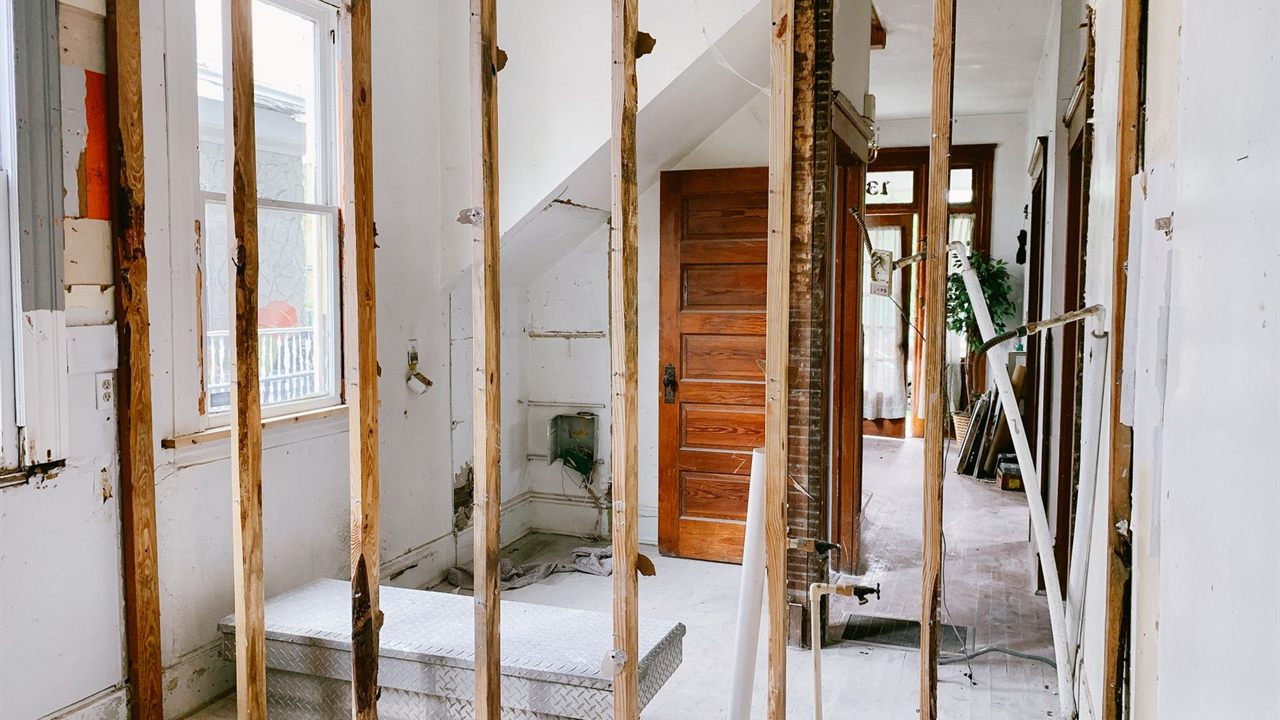
In wall speaker wire: CL2 and CL3 ratings
Gauge decides performance; the jacket decides where the cable may go. Speaker wire run inside walls and ceilings should carry a Class 2 or Class 3 cable marking under the National Electrical Code: CL2, or CL3, which may also be used where CL2 is called for. Lamp cord and unmarked zip cord are not rated for in-wall use.
The plain CL2 and CL3 types suit ordinary walls and ceilings. Runs through a riser between floors call for CL2R or CL3R, and runs in an air-handling plenum call for CL2P or CL3P. The CMR vs CMP cable guide walks through how riser and plenum ratings stack and which code edition applies.
The wiring class an amplifier output needs depends on the amplifier, so check its documentation. The local inspector has the final say on any installation.
Copper, strands and terminations
The resistance table applies to copper. Copper-clad aluminium wire has a higher resistance than copper of the same gauge, so a CCA run needs a heavier gauge, or a shorter run, to stay within the same loss. Check the jacket or the spec sheet before relying on the chart.
Fine stranding makes wire easier to bend into back boxes and onto binding posts. At the ends:
- Strip only as much as the terminal needs, and twist strands so none bridge to the other conductor.
- Keep polarity consistent: the marked conductor goes to positive at both ends.
- Leave a service loop at the speaker cut-out and label both ends of every run.
- Keep speaker runs away from parallel mains cable where you can, and cross it at right angles.
For rough-in positions, the in-ceiling speaker placement guide covers spacing and where to drop each run.
Where to buy speakers and wire for installs
The Bursma in-wall and in-ceiling speakers category lists in-wall, in-ceiling and outdoor pairs, and the amplifiers category lists amps to drive them. Both sit in the Bursma audio and video division, and cable for the rest of the job is in the bulk wire category.
For pricing and availability, contact your Bursma sales representative. If you install for a living, apply for a Bursma dealer account, or call the Wyoming, MI branch or the Columbus, OH branch.
Frequently asked questions
Does speaker wire gauge matter?
It matters in proportion to run length and load. On a 15 foot run to an 8 ohm speaker, 16 and 12 AWG perform almost the same. On a 100 foot run to a 4 ohm speaker, 16 AWG has 0.8 ohm of loop resistance and loses about 1.6 dB.
Is 16 gauge speaker wire good enough?
For 8 ohm speakers on runs up to about 50 feet, yes, at a 5 percent loss limit. Beyond that, or with 4 ohm speakers, step up to 14 AWG.
Is 12 gauge speaker wire overkill?
For a short run, the difference from 14 AWG is negligible. It earns its place on long runs, 4 ohm loads, or several speakers on one run.
Can I use regular speaker wire inside a wall?
Only if its jacket carries an in-wall marking such as CL2 or CL3, or a riser or plenum rating where the space requires one. Unmarked zip cord is meant for exposed runs.