
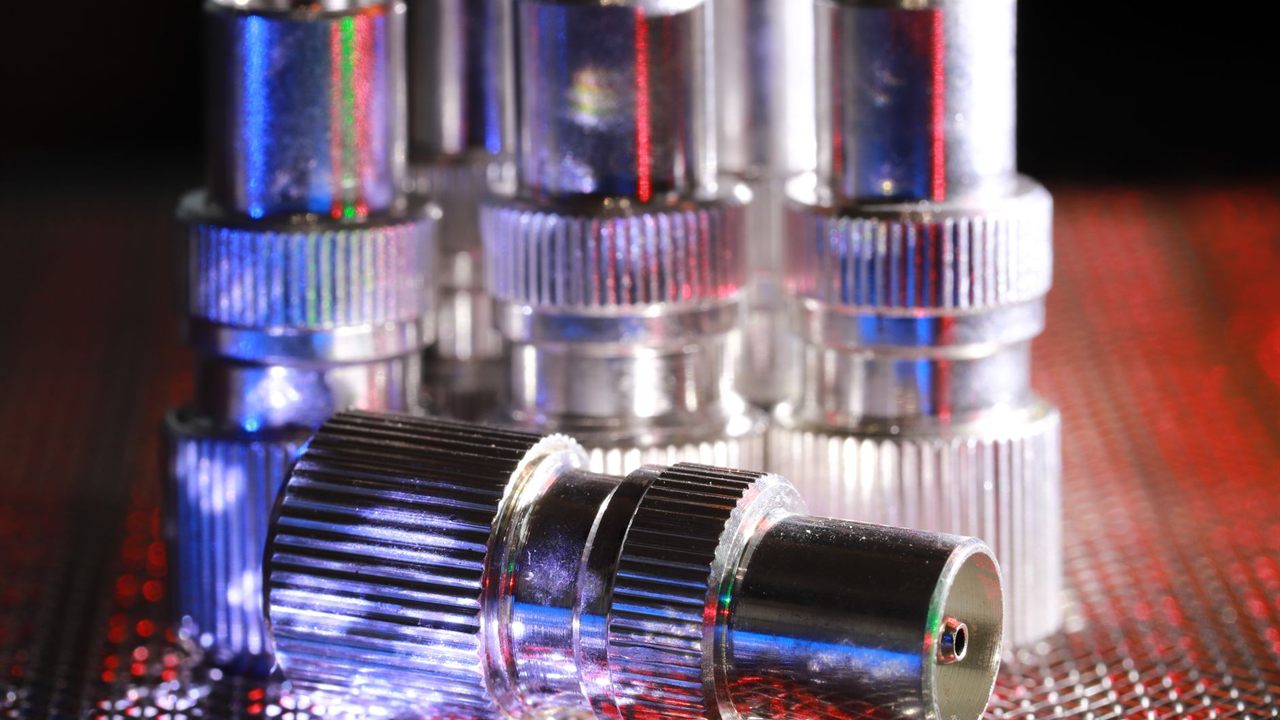
Most coax decisions on a job come down to RG6 vs RG59. Both are 75 ohm cables and both take an F or BNC connector, so the difference is easy to ignore until a satellite tuner drops out or a camera picture goes soft at the far end of the building. This guide sets out what actually separates the two, which signals each one suits, and how to pick from a reel without second guessing.
What is the difference between RG6 and RG59 coax?
RG6 has a thicker center conductor and a larger dielectric than RG59, so it loses less signal at high frequencies. Use RG6 for antennas, satellite, cable TV and broadband. RG59 still works for analog and HD over coax security cameras, where the video runs at low frequencies, and in siamese form it carries camera power in the same jacket.

RG6 vs RG59: what is physically different
The industry drop cable standard, SCTE 74 for braided 75 ohm coaxial drop cable, sets the dimensions for both series. An RG59 center conductor is 0.032 inch across, roughly 20 AWG, while RG6 is 0.0403 inch, roughly 18 AWG. The core under the shield grows to match, from 0.152 inch on RG59 to 0.188 inch on RG6.
That extra copper surface and wider dielectric is the whole story. Impedance stays at 75 ohms because the geometry scales together, but the larger cable wastes less of the signal as heat. RG59 is thinner, lighter and bends tighter, which is why it survives in equipment racks and short patch cords.
| Feature | RG6 | RG59 |
|---|---|---|
| Center conductor | About 18 AWG | About 20 AWG |
| Loss at 1 GHz (max, per 100 ft) | 6.56 dB | 8.12 dB |
| Best fit | Antenna, satellite, CATV, broadband | Analog and HD over coax cameras, short patches |
| Common variants | Dual, messenger, direct burial, quad shield | Siamese with an 18/2 power pair |

Signal loss by frequency is the deciding factor
Coax loss climbs with frequency, and the gap between the two cables widens as it climbs. SCTE 74 lists maximum attenuation per 100 feet at 68 degrees F, and the figures below come from that table.
- 55 MHz: RG59 2.05 dB, RG6 1.60 dB.
- 600 MHz, the top of the current UHF TV band: RG59 6.20 dB, RG6 5.10 dB.
- 1002 MHz, typical cable and broadband plant: RG59 8.12 dB, RG6 6.56 dB.
- 2200 MHz, just above the satellite IF band: RG59 12.24 dB, RG6 10.01 dB.
On a 150 foot run at 1 GHz that works out to about 12.2 dB on RG59 against 9.8 dB on RG6. Losing another 2.3 dB means roughly 40 percent less signal power arriving at the tuner, which is often the line between a locked channel and a pixelated one.

RG6 coax for antenna and satellite runs
For over the air TV, use RG6 coax for antenna down leads every time. UHF channels sit in the 470 to 608 MHz range, where RG59 throws away an extra decibel or more per 100 feet, and a fringe signal has no margin to spare. If the run is long or split several ways, our guide to choosing an antenna preamplifier covers how to budget that loss.
Satellite is less forgiving still. The LNB sends its signal down the cable between roughly 950 and 2150 MHz and takes DC power and switching tones back up the same center conductor, so RG59 is a poor choice at any meaningful length. Ground the coax at the building entrance as covered in how to ground a TV antenna, and match outdoor runs to outdoor antennas and mounts from the same division.

RG6 vs RG59 for CCTV
Security cameras are where RG59 still earns its place. Analog and HD over coax cameras send video at frequencies far below the TV and satellite bands, so the high frequency advantage of RG6 matters much less. Installer forums and camera makers commonly quote around 750 feet for RG59 and 1,000 feet or more for RG6 on analog video, with HD over coax ratings set by each camera and recorder maker.
Choose RG6 for a camera run when the distance pushes past what the camera sheet allows on RG59. For everything else RG59 is easier to pull, fits tighter boxes and terminates quickly with BNC fittings. If the job is still deciding between coax and network cameras, read DVR vs NVR first, then match security cameras to the recorder.
RG59 siamese cable and the power pair
RG59 siamese cable bonds a coax and an 18/2 power pair under one jacket, so a single pull feeds both video and 12 VDC. Bursma carries it as VER107-2323-BK, RG59/18-2 with 85 percent braid on a 500 foot reel. It is the default pull for coax cameras because it halves the labor of separate power and video runs.
On siamese, the power pair usually runs out before the video does. A 12 VDC camera drawing half an amp at 300 feet loses close to 2 volts in an 18 gauge pair, more once IR illuminators switch on at night. Check the camera’s current draw, use a 24 VAC camera or a local supply on the long runs, and the coax itself will rarely be the weak link.
Copper clad steel or solid copper center
SCTE 74 makes copper clad steel the default center conductor for drop cable, with solid copper as an option. At TV and satellite frequencies the signal travels in the outer skin of the conductor, so the thin copper layer over steel performs fine and adds strength for aerial spans.
At baseband video and DC the whole conductor carries current, and the steel core adds resistance. The standard allows up to 49.2 ohms per 1,000 feet for an RG59 copper clad steel center and 31.1 ohms for RG6. That is why camera installers prefer solid copper RG59 for CCTV and keep copper clad steel RG6 for antenna, satellite and broadband work.
Connectors, jackets and telling the two apart
Read the jacket print first; it names the series, shield type and fire rating. RG6 is a little thicker, but side by side the difference is small, so the print is the reliable check.
- Use connectors made for the exact series. An RG6 compression F connector will not seal properly on RG59.
- In walls, the jacket rating matters as much as the series; see CMR vs CMP cable explained.
- Replace old RG59 home runs when converting a house to satellite or broadband rather than chasing loss with amplifiers.
Picking cable from the Bursma coax line
The Bursma coax category carries RG6 in the formats installers pull most: STE200-927BK RG6 with 60 percent braid on a 1000 foot reel, STEDES1003-BK dual RG6 for satellite home runs, STEDES1002-BK with a steel messenger for aerial drops, and VER107-1234-DB-6S direct burial RG6. Related mounts, antennas and preamps sit under the antenna, tower and satellite division.
Pricing and availability are in Shop Online for account holders. If you install for a living and do not have an account yet, open a Bursma dealer account or talk to the Wyoming, MI branch or the Columbus, OH branch.
Frequently asked questions
Can I use RG59 instead of RG6?
For short runs of analog or HD over coax camera video, yes. For antenna, satellite, cable TV or a cable modem, use RG6, because RG59 loses noticeably more signal at those frequencies.
Is RG6 better than RG59 for security cameras?
RG6 reaches farther, but RG59 is enough for most camera runs and is easier to pull and terminate. Pick RG6 when the run exceeds the camera maker’s rated RG59 distance.
What is RG59 siamese cable used for?
It joins RG59 coax and an 18/2 power pair in one jacket so a coax camera gets video and low voltage power from a single pull. Check voltage drop on the power pair for long runs.
Do RG6 and RG59 use the same connectors?
Both use F and BNC styles, but each connector is sized for its cable. Always match the connector to the series printed on the jacket.