

Every burglar alarm prewire starts with the same reel question: 22/2 vs 22/4 alarm wire. Both carry the same gauge copper under a similar jacket, so the choice comes down to what each device needs at the far end and what the system might need later. This guide maps common devices to the right cable, shows when 22 gauge stops being enough, and covers the stranded or solid debate.
What is the difference between 22/2 and 22/4 alarm wire?
22/2 alarm wire has two 22 AWG conductors and suits unpowered devices such as door and window contacts. 22/4 has four conductors, two for power and two for the alarm loop or data, so it feeds motion detectors, glass break sensors and keypads. Many installers pull 22/4 everywhere during prewire because the spare pair costs little and adds flexibility later.
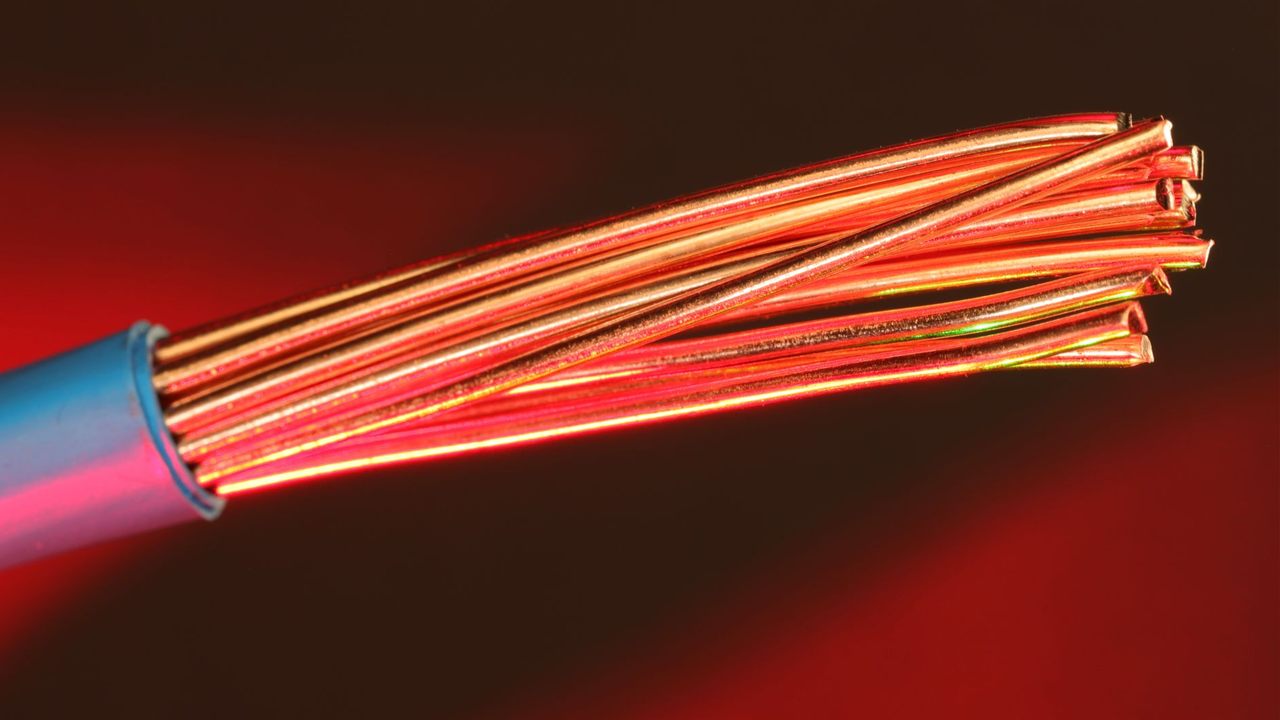
22/2 vs 22/4 alarm wire: what the numbers mean
The first number is the conductor size in American Wire Gauge and the second is the count of conductors under the jacket. So 22/2 is two 22 AWG conductors, usually red and black, and 22/4 is four, usually red, black, green and white. Thermostat cable looks similar but is typically 18 gauge with a different listing, so keep the two reels apart on the truck.
Because the gauge is identical, the two cables are electrically interchangeable for any single circuit. Using 22/4 on a contact simply leaves one pair unused, which most installers fold back and leave in the box as a spare.

Where 22/2 is the right pull
A magnetic door or window contact is a dry switch with no power draw, so two conductors are all it needs. The pair forms the zone loop back to the panel, with the end of line resistor fitted at the device when the panel calls for it.
- Recessed and surface door and window contacts.
- Overhead door contacts and other single switch inputs.
- Panic buttons and other unpowered normally open or normally closed devices.
Bursma carries COL51101-55-01 22/2 alarm wire in a 500 foot white poly bag for this work.

Where 22/4 earns its extra pair
Any device that needs power uses one pair for 12 VDC and the other for the alarm contact or a data bus. Motion detectors, glass break detectors and powered shock sensors all fall here. Keypads and expansion modules use the four conductors for power and two way data, so they always take 22/4 or heavier.
During new construction the extra pair is cheap insurance. It can carry a tamper loop, convert a contact location to a powered sensor later, or replace a conductor damaged by a drywall screw. For the decision between wired and wireless points on a retrofit, see wireless vs hardwired alarm sensors.
| Device | Typical cable | Why |
|---|---|---|
| Door and window contacts | 22/2 | Unpowered zone loop |
| Motion and glass break detectors | 22/4 | Power pair plus alarm pair |
| Keypads and expanders | 22/4 or heavier | Power plus data bus |
| Sirens and strobes | 18/2 or heavier | Higher current draw |
| Panel transformer | 18/2 or 16/2 | Feeds the whole system |

Alarm wire gauge and voltage drop
Alarm wire gauge matters once current rises or runs get long. Copper at 22 AWG measures about 16 ohms per 1,000 feet per conductor, while 18 AWG is closer to 6.4 ohms. Current flows out and back, so the loop length is twice the run.
- A motion detector drawing 20 mA at 300 feet sees 600 feet of loop, roughly 9.7 ohms, and drops about 0.2 volts. That is negligible.
- A keypad drawing 100 mA at 200 feet drops about 0.64 volts on 22 AWG. That is workable, but it adds up when several keypads share a run.
- A siren drawing 1 amp at 100 feet drops about 3.2 volts on 22 AWG against 1.3 volts on 18 AWG. That is why sirens get 18/2.
Pairing two conductors of a 22/4 together halves the resistance on a marginal power run. The panel manual still sets the maximum keypad and bus distances, and those limits are often a few hundred feet, so check it before the walls close.

Stranded vs solid alarm wire
The stranded vs solid alarm wire debate is mostly about terminations. Solid copper seats cleanly under screw terminals and in punch down blocks, holds its shape in a box and pulls easily. It is also easier to nick when stripping, and a nicked solid conductor can crack at a terminal after the device is moved a few times.
Stranded wire flexes without fatigue, survives repeated re-termination and is kinder on contacts mounted in doors and moving parts. Its drawback is stray strands, so twist the ends tight or use ferrules where the terminal allows. Either works electrically; pick one per job so the crew terminates consistently.
Jacket ratings and code
Alarm wire is a power limited cable, and the National Electrical Code, NFPA 70, sets the cable types it can be listed as: CL2 and CL3 for general use, with riser and plenum versions where the space requires them. The jacket print shows the listing, and CMR vs CMP cable explained covers when riser or plenum is needed.
Fire alarm circuits use their own FPL cable family in NFPA 70, so do not run burglar alarm wire on a fire alarm loop unless it carries that rating. Intrusion installation practice is covered by NFPA 731 for premises security systems, and the local authority having jurisdiction has the final word.
Prewire tips that save callbacks
- Home run each device to the panel location rather than daisy chaining zones.
- Label both ends of every cable with the zone or room before drywall.
- Leave a service loop at the panel and a short coil at each device.
- Keep alarm wire away from line voltage and cross it at right angles.
- Pull 22/4 to motion and keypad locations even if the plan shows wireless today.
Before trim out, ring out every run with a meter for continuity and shorts. A damaged conductor found at prewire takes minutes to fix; the same fault found after paint means a callback and a hole in a finished wall.
Where to buy alarm wire
The Bursma security wire category includes COL51112-55-09 22/4 stranded alarm wire on a 500 foot gray poly bag alongside the 22/2. Contacts, motion detectors and keypads sit in intrusion alarms, and the full division is under security, surveillance and control.
Pricing and availability are in Shop Online for account holders. To order, open a Bursma dealer account or contact the Wyoming, MI branch or the Columbus, OH branch.
Frequently asked questions
Can I use 22/4 instead of 22/2?
Yes. The gauge is the same, so 22/4 works anywhere 22/2 does. Leave the unused pair folded back in the box as a spare.
What gauge wire should I use for an alarm siren?
Use 18/2 or heavier for sirens and strobes. They draw far more current than sensors, and 22 gauge loses too much voltage on longer runs.
Is solid or stranded alarm wire better?
Both work. Solid suits punch down blocks and screw terminals, while stranded tolerates flexing and repeated re-termination better.
How far can you run 22 gauge alarm wire?
For unpowered contacts, distance is rarely the limit. For powered devices it depends on current draw, so work out the voltage drop and follow the panel manual’s limits for keypads and bus devices.
Can burglar alarm wire be used for fire alarm devices?
Only if the cable carries a fire alarm listing. Standard CL2 or CL3 alarm wire is not rated for power limited fire alarm circuits.